


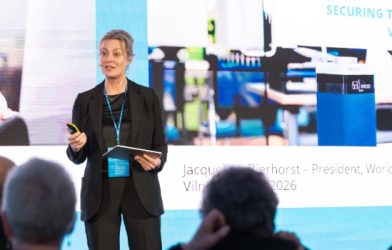
We interview Jacqueline Bierhorst, President of WorldDAB, to assess the current situation and explore the main challenges of this transition


*This content is included in the June issue of TM BROADCAST. You can access the full magazine here.
The pace of digital adoption in radio and television is, without a doubt, vastly different. While DTT (Digital Terrestrial Television) has completely replaced analogue television in a large number of countries and its reach is practically global, the scenario for radio is quite different. Differences in institutional support, household penetration, and direct competition with streaming services are some of the factors that help explain this gap.
But this situation appears to be changing, and digital radio is gaining ground in a growing number of countries. “Just in the last six months, we’ve seen the launch of DAB+ in Turkey and the announcement of a nationwide rollout in Greece, as well as new trials in countries as diverse as Ireland, Bosnia & Herzegovina, and Thailand. This comes alongside sustained growth in established markets,” explains to TM BROADCAST Jacqueline Bierhorst, President of WorldDAB and Project Director of Digital Radio NL.
The most prominent case is Norway, which became the first country to completely switch off analogue radio in 2017. But other countries are also taking steps in this direction. “We’ve also seen FM switch-off from Switzerland’s public broadcaster SRG SSR, and the start of a phased switch-off in the German state of Schleswig-Holstein – some stations have started, and on 30 June, Deutschlandfunk and Deutschlandfunk Kultur will switch completely from FM to DAB+ at twelve locations and for a total of 16 transmitters,” states Jacqueline Bierhorst.
She also notes that “there’s significant interest in Africa, the Middle East and the Asia Pacific region, with well-established services in Australia, Saudi Arabia launching in 2023, and trials in progress in many countries such as Ghana, Uganda and Indonesia.”
WorldDAB promotes the adoption and implementation of digital broadcast radio based on DAB, the standard used by broadcasters in Europe, Asia-Pacific and beyond. “We deliver tailored solutions and advice on all aspects of implementation to digital broadcast and/or the switch from analogue to digital radio including regulation, licensing, technical trials, network build out, marketing and production of new digital radio content,” explains Bierhorst.

“DAB+ is efficient, capable of broadcasting many stations on one multiplex, and therefore offering economic and environmental benefits”
Among the strategic objectives of this association is “to support the rollout of DAB+ to new territories for both public and private broadcasters through the entire chain, alongside working to continue the growth of DAB+ in the markets where it is already well-established”, as well as “work with the automotive sector to ensure that digital broadcast/terrestrial radio remains at the heart of the dashboard in the connected car. And we’ll continue to roll out our innovative and potentially life-saving Automatic Safety Alerts (ASA).”
The car, a key element in the digital transition
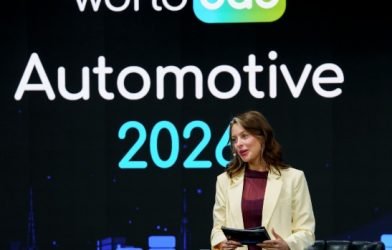
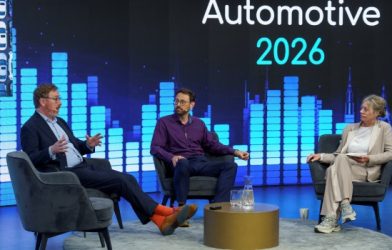
This association will host this year in Madrid (Spain), on June 19, the WorldDAB Automotive event, focused on the adoption of the DAB+ standard in vehicles. It is one of two global forums —along with the November Summit— that the organisation holds every year.
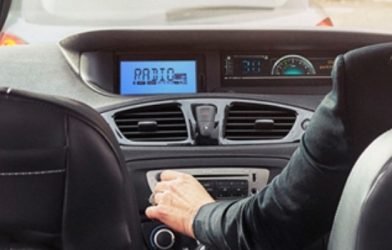
The car is one of radio’s key listening heartlands, so it’s critical that digital broadcast radio remains at the heart of the dashboard, explains Jacqueline Bierhorst. “We’ve done two significant pieces of automotive research: our Car Buyers Survey found that 90% of car buyers say that broadcast radio should be standard in every vehicle; while our ‘Dashboard Dialogue’ work confirmed that radio remains an essential part of the in-car experience and is the most listened-to audio platform in the car. That’s one of the key messages to the automotive industry at our event in Madrid.”
And why host the WorldDAB Automotive Summit in Madrid? “I was in Madrid for the launch of RTVE’s DAB+ broadcasts just over a year ago,” explains Bierhorst. “They’ve done an amazing job rolling out DAB+ to 15 cities now. Coupled with Spain being one of the largest car manufacturers in Europe, it was the perfect choice for us, and the right time to bring the Automotive conference here as DAB+ grows across the country.”
On World Radio Day 2025, Radio Nacional, Radio Clásica, Radio 3, and Radio 5 began broadcasting their programming on DAB+ in Guadalajara (Spain), meaning that RNE’s digital radio broadcasts are now available in 15 Spanish cities. “We’re very supportive of RTVE’s calls for a unified approach for all legal Spanish radio stations to work together to develop a technical plan and roadmap to move to DAB+ and secure radio’s digital future in Spain,” notes the President of WorldDAB.

“DAB+ offers the opportunity to ‘grow the cake’ for radio, through offering innovative new services, brand extensions and ‘pop-up’ stations, increasing revenues in a way that simply isn’t possible when the FM band is full in many cities”
Key trends in digital radio
We now ask Jacqueline Bierhorst, President of WorldDAB, about some of the current trends and challenges in digital radio:
What advantages do you see in DAB+ compared to other standards?

DAB is the most widespread terrestrial broadcast digital radio standard, and an established part of the radio landscape across much of Europe, Australia and elsewhere. It’s here, right now, with around 150 million receivers in the market around the world, and almost all new cars in Europe coming with DAB+ as standard. It’s also efficient, capable of broadcasting many stations on one multiplex, and therefore offering economic and environmental benefits, through reduced energy consumption that it makes it the most efficient choice for most counties that are at digitizing.
Our new ASA alerts offer unique features such as location targeting – only people in affected areas are notified, signaling between ensembles, and wake up functionality where receivers can be woken up by DAB+, which is especially important for alarm clock radios without an internet connection.
And DAB+ offers significant broadening of choice for listeners with over 60 national stations now on DAB in the United Kingdom, against seven on analogue; and growth also in Belgium, Czechia and Italy where listeners can now enjoy over 50 national DAB+ stations.
“We see proof from healthy radio markets where digitization helped re-energize and grow the cake, both in money and in growing the audience”
What new opportunities do you think digital radio offers broadcasters?
For broadcasters, DAB+ provides the digital future needed for broadcast radio — one that allows radio to keep control as broadcasters over our own distribution, leveling the playing field with the digital tech giants that want a piece of our “share of ear”. And it offers the opportunity to ‘grow the cake’ for radio, through offering innovative new services, brand extensions and ‘pop-up’ stations, increasing revenues in a way that simply isn’t possible when the FM band is full in many cities. We can demonstrate that stations around the world that have either made the switch to DAB+ or are pure DAB+ only stations are seeing the benefits and have thriving markets.
What are the main challenges broadcasters face when migrating to digital radio?
It all starts with clear regulation that does justice to the radio market. The radio industry needs to work together, ensuring good coverage, and that the consumer receivers are available with DAB+ in cars too, alongside great content, more than on FM. During every step, communication is key. Marketing campaigns are essential, explaining to people what is in for them to start listening via DAB+. The costs mostly go before the ROI. That may make it challenging at the beginning. But we see proof from healthy radio markets where digitization helped re-energize and grow the cake, both in money and in growing the audience.
What role does regulation play in this transition to digital radio?
The European Electronic Communications Code (EECC) means that since December 2020, across Europe, all radios in new cars must be capable of receiving and reproducing digital terrestrial radio has been very significant in supporting digital broadcast radio’s place at the heart of the dashboard. So proportionate regulation has a role to play when developed in collaboration with stakeholders. Some territories prefer to take a more market-led approach, and this has also been successful.
How do you think analog and digital radio should coexist? What strategies are broadcasters following during this transition?
This varies widely from market to market. Norway was a trailblazer in 2017, switching off national FM services, and we are now seeing Switzerland and parts of Germany following. In many markets, we know AM and FM transmission equipment is reaching the end of its life and either needs significant investment in upgrading or taking the opportunity to adopt more efficient and cost-effective DAB+ broadcasts.
I firmly believe that broadcast radio and DAB+ will remain at the heart of audio consumption. We know that digital terrestrial broadcast radio within the overall digital strategy makes sure radio grows.
WorldDAB — the global industry forum of which I am very proud to be President — continues to be ready to support the increasing number of markets around the world seeking to implement DAB+ to provide robust and future-facing broadcast radio.

“Proportionate regulation has a role to play when developed in collaboration with stakeholders. Some territories prefer to take a more market-led approach, and this has also been successful”



Comments are closed