


The various overhead cable camera systems (Cable Cam Systems) have demonstrated their success in generating content for audiovisual productions, thus providing showiness and enrichment to the AV language under very high standards in terms of safety


*This content is included in the August issue of TM BROADCAST. You can access the full magazine here.
A technology that is based on simplicity, perfect control, reliability and creativity has more than enough reasons to be established as a standard solution. More specifically, he various overhead cable camera systems (Cable Cam System) have demonstrated their success in generating content for audiovisual productions, thus providing showiness and enrichment to the AV language under very high standards in terms of safety.
The Cable Cam System is the most generic name encompassing all existing systems that hang the camera from one and/or several types of cables. In this article we will not be making reference to cameras placed on a helicopter, or the use of drones in AV, or any other support that allowing the aerial shots.
To be clear, the name Cable Cam System does not include chain systems that are operational by cable communication (either fiber optic/copper/IP and by any type of Triax, Multicore, Remote Multipin, RJ45…) enabling the handling of operations and recording.
If we check the time line a bit in detail, we can see that there have been different solutions in the field of Cable Cam Systems:
- 1984: SkyCam emerged from the hand of Garrett Brown. It used a system of cables and pulleys that hold the camera in the air. There are several types:
- SkyCam 4K/FHD: a very interesting option for its great stability, supporting camera/optics equipment for the 4K and FHD environment.
- SkyCam X: Enables greater flexibility and control with the ability to fly at greater angles and perform more complex movements.
- SkyCam Nano: a lighter model to get the job done where spaces are smaller.
- 2000: Austrian company CCSystems Inc. developed the SpiderCam. Building on the SkyCam, its success was further enhanced by innovations in the four-cable suspension and control system.
As part of IBC 2022, the news was that SpiderCam had been acquired by Ross Video. There are several types of SpiderCam:
- SpiderCam Light: designed to work in smaller places and spaces, which has allowed this device to enter the multi-camera dynamics of a program made on a TV set.
- SpiderCam Field: designed to adapt to large spaces, allows working with camera bodies and optics from the field of cinema and/or cinema broadcast.
- SpiderCam Mini: This is the most compact version.
- SpiderCam Bow. a more precise solution since it only offers a point-to-point system, controlling different flight altitude levels.
- 2011: flyLine Cable Cam. An American point-to-point solution with an automatic final stop movement control system, called MoCo, which allows setting user-defined endpoints to avoid collisions with other objects or surfaces.
- 2012: Defy DactylCam. It is an American company that developed a fixed-cable camera system. There are several models:
- Cadence: a professional, intelligent and simple system that can be operated by a single person.
- Dactyl Pro: system with an operating range that can exceed 8 hours and system status monitored wirelessly through the pulse controller. Designed for the largest film applications, up to 68 kg, with speeds than can reach up to 50 mph.
- Dactyl Live: A system designed for live broadcasts offering an intelligent 2D solution under IP control.
- 2015-2018: High Sight Cam, an American company that developed several models adapting to the needs of an increasingly competitive market:
- XL2. High-end model that allows working with a very large range of payloads. Point-to-point “clothes-line” based point-to-point cable system. It is virtually silent and offers extremely smooth operation at any speed, even on slow downward movement.
- Pro. It features innovative vibration damping wheel technology as well as an adjustable vibration isolator for a perfectly stable camera movement.
- Mini. A simplified solution that is adapted to lighter devices, with full support for DJI Osmo, DJI Osmo Mobile and Karma Grip.
- Wiral Lite. A simple system supporting all cameras up to 1.5 kg.
- 2020-2025: A myriad of solutions and systems adapted to any type of production, space, content, equipment and budget: Sky Vertical, Sky Horizontal, Speed Line SPL ATC 17, Syrp Slingshot 3-Axis, RobyCam, DynamiCam, JoyMechanix, IndustryCam, FlyingKitty Cablecam Shooting System, FM12CableCam…
Worth highlighting is the SEC Swiss Eagle Eye Wire Cam System (Ross Video), a modular system that offers 1D, 2D and 3D assemblies for various production needs. It offers maximum flexibility as it can be used in fixed installations, studios and live events. In addition, it features a high level of control and stabilization thanks to its software developments, thus providing high quality dynamic aerial images.

These systems can be classified by the type of movement allowed: 1D systems for vertical movement; 2D systems for horizontal and vertical shots; and 3D systems for dynamic overhead shots offering 360º views.
USA, United Kingdom, Germany, Italy and China are the manufacturing countries that dominate the different cable-mounted overhead camera systems, offering solutions for professional (Broadcast/DCI), semiprofessional and amateur (procomsumer) environments. When it comes to choosing which is the most convenient system, we must know some technical and operational specifications: movement on axles, payload, maximum speed reached, cable length supported, type of control and stabilization, among others.
Although there are several types of overhead camera systems suspended by cables, we can make a generic classification based on their characteristics, cable system configurations and applications:
- Linear Cam Cable (1-axis): this is the most basic system. It features a single cable between two points. The movements are simple, allowing only a forward and backward (X-axis) motion. Widely used in racing sporting events, concerts, extreme sports… The most representative models in this category are: FlyLine Cable Cam and Wiral LITE.
- Linear Cam Cable with Stabilizer (Gimbal): it is an improvement on the previous one since it features a gimbal (DJI Ronin type or similar) to control the camera’s orientation. With this improvement we can make forward/backward movements along with panning, tilting and rotating the camera.
- Cam cable in “X” or grid (2 or more axes): they have several cables (usually four), anchored in different directions. These are the most sophisticated systems allowing greater freedom of movement along axes X, Y, and even Z (up/down), within a given space. Widely used in large stadiums, massive concerts and spectacular events. The most used models are Skycam and Spidercam.
- Cam cable in “X” with stabilizer (Gimbal). Based on the previous one, with the possibility of placing a gimbal. This allows to achieve camera position and shot type (Tilt up, Panning, Overhead shot, Whole shot, Tilt down, Travelling In/out, Chopped shot, Foreground,…) which increases the spectacularity in the filmmaking/directing of the audiovisual material. A good example is the Eagle Eye 250 Cable Cam.
In short, we can classify these systems by the type of movement they allow: 1D systems for vertical movement; 2D systems for horizontal and vertical shots; and 3D systems for dynamic aerial shots offering 360º.

Every aerial camera system suspended by cables comprises several key parts perfectly assembled to render stable, controlled and safe aerial shots. Below, we present the main components:
TENSIONING CABLES (1 or 4)
It is the key element of aerial cable systems. Its function is basic and essential: to support the equipment at heights and guide the travel of the system. It involves the installation of a cable line (or several lines) between two or more points that are elevated above the area where the recording or live performance is made.
Motorized winches are also used for the collection or extension of the cable, which are placed according to the location and positioning of the equipment on premises (one for each cable, especially in four-wire aerial systems).
The materials most commonly used are steel wire and/or Kevlar or Dyneema. It must be said that both paracord-type elastic ropes or common nylon, which have elongation and cause dangerous oscillations, and fine braided steel should not be used because they feature greater vibration and weight.
It is very remarkable that the kevlar cable is being used the most, given that it is made of aramid (aromatic polyamide) fiber, a material well known for being five times stronger than steel in relation to its weight. It is a very resistant synthetic material developed by the company DuPont.
The kevlar cable is widely used for its high tensile strength, lightness, resistance to heat and cutting, in addition to not being electrically conductive and adapting to raveling or bending without losing strength.
Being a braided cable, there are several types of kevlar cables for the Cable Cam System:
- Pure braided Kevlar: typical of the professional field.
- Kevlar with polyester cover: also used in professional environments.
- Kevlar coated with Teflon or PU: semi-professional field.
- Hybrid rope (Kevlar + Dyneema or Spectra): it is typical in amateur systems.

In these systems, the figure of the Cable Cam operator or pilot is key, as they controls and positions the equipment in the space (height, angles, forward/backward movements).
MOTORIZED SHUTTLE OR TROLLEY
It is the plate or platform that moves through the cables and incorporates the gimbal and the camera. As an essential component, it has a set of grip wheels together with electric motors (brushless) for propulsion and a built-in battery (in portable models).
The motor provides a forward/backward motion through the tensioned cable. It can be remote (RC), stand-alone or through programming software. Automatic brakes, speed change and/or automatic return are optional, but highly recommended.
COUPLING SYSTEM, GIMBAL and/or CAMERA STABILIZER
Obviously, all these are accessories and add-ons that allow us to correctly and safely position the capture device. If image stabilization is available, sudden movements or vibrations are avoided.
A gimbal is a mechanical device that allows a camera to be stabilized. It can be 2-axis (pan/tilt) or 3-axis (pan/tilt/roll). The most popular are: DJI Ronin, Gremsy, Freefly Movi, among others.
CAMERA
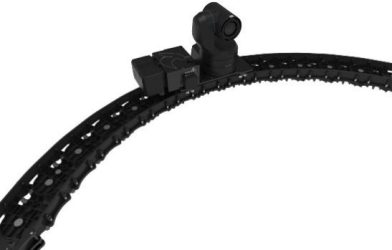
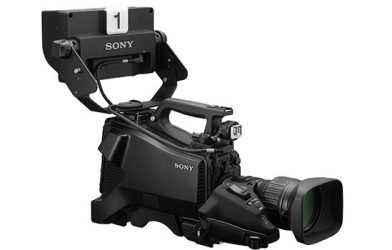
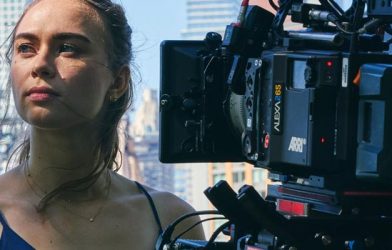
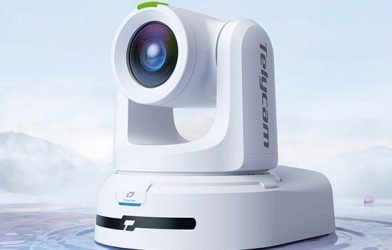
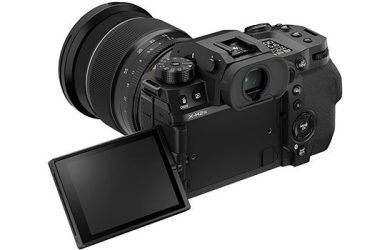
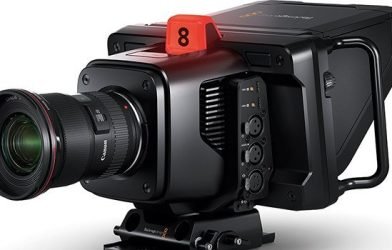
Any image capture and recording device. They can be film, broadcast, action, modular, compact, DSLR, PTZ cameras… depending on the environment and type of AV production.
REMOTE CONTROL SYSTEM
Its main function is to allow the operator/s to control the movement of the shuttle/trolley, gimbal and camera. Several options are available:
- RC (radio control)
- Mobile app (WiFi/Bluetooth)
- Console with professional joysticks
VIDEO STREAMING SYSTEM (FPV OR LIVE VIEW)
It makes it easy for us to send video in real time from the camera to the operator or the production facilities. There are several technologies such as wireless HDMI, SDI, WiFi, 5.8 GHz FPV.
There is the possibility of making wired connections by using the benefits of a braided kevlar cable.
ANCHORS AND TENSIONERS
We refer to any accessory and add-on that holds the cables in secure points and allow their tension to be adjusted: pulleys, rope tensioners, snap hooks, clamps or straps, German carracks, tie ratchet with tape…
BATTERIES /POWER SUPPLY SYSTEMS
It is the electrical power supply for all the components of the Cable Cam System to work: the shuttle/trolley, the motors and the video transmitter. LiPo batteries or external packs are normally used.
SAFETY SYSTEM
Its main function is the prevention of falls of or damages to the Cable Cam System and risks for audiences, players or singers and for the technical team itself. It is advisable to have multiple redundancy mechanisms such as safety lines, parachutes, emergency brakes, captive safety wheels, captive line lochers and holding snap hooks, among others.

Both indoors and outdoors, there are many environments where cable cams are used: TV programs, filming, live broadcasts or recasts and recordings of concerts and festivals.
The Cable Cam System has many advantages over other aerial shooting options such as total control of the travel, recording over the audience, mechanization of movements to repeat shots with absolute precision. It is a silent and discreet system, benefiting from a broad range of operation, relying of a legal and safe use, in addition to its recognition as a system enabling precise and stable movements.
The most complex overhead cable camera systems require qualified human staff for assembly/disassembly, motion and operation. More specifically, in these systems, the figure of the Cable Cam operator or pilot is key, as they control and position the equipment in the space (height, angles, forward/backward motion). There is also the camera operator, who is dedicated to the functions and operations of the camera. It is the person who renders the type of shot (PAN, TILT, zoom, focus, diaphragm,…). And finally, we find the figure of the audiovisual or auxiliary technician, who performs the functions of assembly and disassembly, camera stabilization and tuning of controls and remotes.
Both indoors and outdoors, there are many environments where cable cams are used: TV programs, filming of commercials/feature films/videoclips, live broadcasts of sporting events, as well as corporate events and, of course, broadcasts and recordings of concerts and festivals.
LigaSantander, NFL (national Football League), Premier League, Champions League, Eurovision, Olympic Games, Formula 1, American Ninja Warrior, The Voice TV, Benidorm Fest RTVE, and Tele 5 News are some examples where dynamism, monitoring at different speeds, maximum control of the frame, very precise and stable in and out movements, aerial views have all been achieved through this system.
In short, using overhead cable camera systems (Cable Cam System) has brought freedom to visuals.


Comments are closed