


We interview this industry veteran to gain his market perspective. IP, the dominance of OTT platforms, the new production models emerging in sports broadcasting, and the expansion of software over hardware are among the key topics addressed in this conversation


*This content is included in the July issue of TM BROADCAST. You can access the full magazine here.
Simen K. Frostad has a rare talent for explaining complex matters in a way that makes them seem simple. Perhaps that’s why he’s been able to clearly identify a growing market trend in today’s fast-paced technological landscape: the need to create accessible tools. As he puts it: “What we need today are tools that help non-experts understand what’s going on. That’s absolutely critical. Across IT, telecom, and the broader IP space, we’re seeing fewer people with in-depth knowledge. That means our tools must do more—providing deeper insights and even suggestions for how to fix problems.”
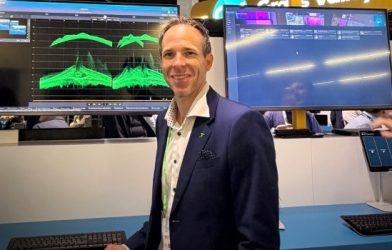
Co-founder of Bridge Technologies in 2004 and currently the company’s Chairman, Simen K. Frostad joins the Industry Voices section to share his seasoned market vision with TM BROADCAST readers.
A pioneer in recognizing the advantages of IP—a technology that has transformed the industry from top to bottom—he is convinced that the sector must fully embrace the shift to IT environments. Doing so, he stresses, requires a joint effort from network and video departments, which often struggle to communicate due to their different technical languages.
“IT teams are incredibly vigilant and have powerful orchestration tools that make operations much more efficient than traditional broadcast workflows,” says Simen K. Frostad. At the same time, he sends a message to the IT world: “It needs to be more time-sensitive and better understand the critical nature of real-time broadcast.”
The dominance of OTT platforms, the new production models emerging in sports broadcasting, and the expansion of software over hardware are also key topics in this conversation.

“A core part of our work today is enabling teams to immediately determine if a problem is transport-related or production-related, so the appropriate experts can step in and resolve it”
How did Bridge Technologies come about?
We founded the company in 2004, driven by a strong interest in IP-based technologies. But the story actually begins earlier—back in 1999, when we created a Scandinavian IP-based contribution network. At the time, IP technology was still in its infancy, so we were definitely early adopters.
We had a great start thanks to substantial support from Cisco, and we developed a network that transported TS-based MPEG-2 at what was then considered high bandwidth—50 megabits—with low latency over an IP/MPLS network. That experience gave us deep insight into IP, and we quickly became enthusiastic advocates for it.
I also received a lot of support from Tandberg Television, which was a major player in broadcast systems at that time. I got to work closely with some of their top engineers—some of whom developed Tandberg’s very first IP interfaces. So, when Tandberg decided in 2004 to relocate much of its R&D from Norway to the UK, many engineers weren’t keen on moving abroad. That situation helped spark the creation of Bridge Technologies. We saw a clear need to improve visibility and understanding of packet transport—because with IP, a lot happens inside the switch, and it’s not always obvious how packets are actually flowing or how minor configuration changes can have a major impact.
Broadcast media, in particular, is unforgiving. If you start losing packets, the result is visible artifacts in the picture. The problem is that an artifact caused by an encoder issue looks exactly the same as one caused by packet loss in transport. So our first mission was to create tools that could help distinguish between those two root causes—whether the issue was in the production chain or in the transport layer.
That remains a core part of our work today: enabling teams to immediately determine if a problem is transport-related or production-related, so the appropriate experts can step in and resolve it.

“The remote aspect is transforming the way production is done. We’ve already seen it happening in major sports events over the past two years, and we’re going to see even more of it in the next two”
What are your main strategic goals?
One of our main strategic goals is to create tools that are accessible to non-experts—people who may not fully understand how these complex systems work, but who need enough clarity to identify issues and bring in the right teams to fix them. Even in production environments with incredibly talented engineers, many don’t have deep IP expertise. Conversely, IT departments that support parts of production often don’t understand media transport. So, we aim to bridge that gap—translating advanced metrics into insights that can be understood and acted upon by non-specialists.
That brings me to one of my questions — the convergence between video and IT departments. What would you say are the main challenges in making these two areas work together?
Well, first of all, these two groups have grown up quite differently. The IT department is full of clever people who understand a lot about scaling, processing, and systems. But traditionally, they’ve focused on supplying their own set of tools and capabilities within a service-based framework. Telecommunications people, on the other hand, have tended to embed a lot of intelligence directly into the network.
So even though they share common goals, their approaches—and their language—are different. That creates a bit of friction. The world is moving more and more towards IT because it’s such a vast and well-developed industry, and that means broadcasters have to learn how to communicate better with IT professionals.
The challenge is that the IT world can be slow to adapt to the specific needs of broadcast. In high-end broadcasting, there’s no room for packet loss. If you’re delivering low-latency services, there’s no error correction fast enough to compensate for lost packets. So, while I have a lot of respect for the IT industry, I do think it needs to be more time-sensitive and better understand the critical nature of real-time broadcast.
That said, the broadcast industry can also learn a great deal from IT. IT teams are incredibly vigilant and have powerful orchestration tools that make operations much more efficient than traditional broadcast workflows. So yes, we’re heading toward a more IT-centric world, and IT will continue to dominate—but both sides have something valuable to offer.
You mentioned founding Bridge Technologies back in 2004. How would you assess how IP technology has evolved since then?
I co-founded Bridge with three brilliant colleagues from Tandberg Television. One of the strategic missions that have remained constant is addressing the decline in deep expertise across the industry.
What we need today are tools that help non-experts understand what’s going on. That’s absolutely critical. Across IT, telecom, and the broader IP space, we’re seeing fewer people with in-depth knowledge. That means our tools must do more—providing deeper insights and even suggestions for how to fix problems.
Right now, IP is embedded in every aspect of broadcast. There’s no avoiding it. Even in SDI environments, you’ll find devices controlled via IP, so a solid understanding of IP is essential.
Interestingly, while bandwidth has exploded—moving from 155 megabit networks in the late ’90s (which seemed huge at the time), to gigabit, then 10 GbE, and now up to 100, 400, and even 800 GbE—the core challenges haven’t changed. You still need to trace packets with absolute precision.
What’s coming next, in my view, is the expansion of networks not just to transport data, but also to support things like memory sharing and server clustering. That’s where IP is headed—towards enabling powerful, distributed computing environments. And as vendors, we’re genuinely excited about what’s possible.

“While I have a lot of respect for the IT industry, I do think it needs to be more time-sensitive and better understand the critical nature of real-time broadcast”
I’d also like to hear your insights about OTT platforms and streaming services. How do you see these platforms evolving, and how do you think they will coexist with traditional broadcast in the future?
We’ve always believed that OTT would become dominant—mainly because it makes excellent use of standard IT technologies. As soon as you introduce web caching, you’ve got the basic framework for an OTT system.
Of course, it’s not without its challenges. When you implement caching across multiple layers, maintaining precise timing becomes essential—especially if you want to reduce latency. It’s relatively easy to manage OTT systems with 120-second delays using standard servers and web infrastructure. But if you want to bring that down to just a few seconds, the timing between caching layers needs to be extremely accurate.
You could argue that multicast is a better solution in terms of latency and distribution efficiency. And technically, that’s true. But building large-scale multicast networks is complex and demands highly reliable, often expensive, switching hardware. OTT, on the other hand, is a much more cost-effective solution.
Look at companies like Netflix—they’ve taken OTT to its limits. One of their major advantages is owning their own CDN. They have distribution nodes located very close to the end user, which helps a lot in terms of performance and latency.
They’re now pushing further into real-time OTT solutions. And I think as latency requirements become stricter and more players start building their own OTT CDNs, we’ll see OTT become the dominant model.
I don’t think there’s much growth left in traditional linear distribution. Even what we still call “linear” is mostly IP-based today. Although terrestrial transmission in Europe hasn’t transitioned to IP yet, it’s clearly moving in that direction.

The beauty of OTT is that once you switch to IP-based delivery—sending content in packet blocks or segments—you can transport virtually anything. I’m a big fan of OTT because it’s incredibly powerful to be able to cache content on standard HTTP servers.
“I think as latency requirements become stricter and more players start building their own OTT CDNs, we’ll see OTT become the dominant model”
In line with what you’ve just mentioned, broadcasters today operate across a wide range of delivery formats. How is Bridge Technologies addressing this technological diversity in its product portfolio?
Well, we aim to support all aspects of broadcast because most operators—despite moving in a specific direction—still use a mix of technologies. A typical broadcaster will use satellite, OTT, contribution links, terrestrial delivery, and cable systems.
That’s why we’ve built a complete portfolio capable of monitoring all these delivery methods from a single central point. It’s crucial for broadcast operations to maintain visibility over legacy systems too.
Interestingly, legacy systems are actually seeing a kind of resurgence. With more advanced monitoring and analysis tools, broadcasters are able to cut costs—something that’s a top priority right now. Running multiple technologies in parallel drives up expenses. So we’re proud that our tools are helping reduce those costs by making it viable to continue operating legacy networks alongside new distribution models.
Live production is another topic I’d like to discuss—especially in sports, where it’s evolving rapidly. How do you assess this transformation, and which trends do you believe will define its future direction?
About seven or eight years ago, we took our first steps into live production. That was when we could begin using commoditized 100 GbE interfaces with servers and standard CPUs.
Just as a side note, all of our platforms are software-based. They’re built on CPU architecture, and we spend a lot of time developing software—even for our embedded systems. So when we started working with larger servers using interfaces like 200 GbE (which we now support), it became clear we could do some pretty spectacular things.
One major advantage of this software-based approach is the ability to use HTML—especially HTML5—as a flexible user interface. Today, we’re delivering full-motion video over HTML with extremely low latency. That means you can decouple the operator from the physical hardware.
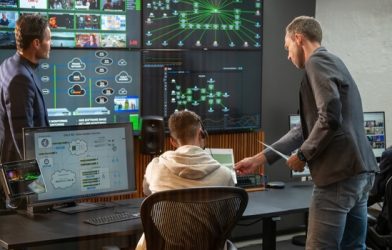
Typically, you’ll have servers in a data center or on-prem production facility, but the creatives and operators can be located anywhere. That’s the biggest shift we’ve seen, particularly in high-end sports production. You no longer need your entire team on-site at the venue.
Instead, teams are being centralized in hubs or remote production facilities. That saves a huge amount of money and logistics—and also improves working conditions. Rather than cramming people into OB vans, you can provide a more relaxed and efficient environment for delivering high-quality content.
“One example we’re showcasing at IBC this year is speaker control. We now support IP-based Ethernet speakers that are powered via PoE”
We supported the World Cup in Qatar a few years ago, where everything was done centrally. One especially interesting aspect was that even camera shading was handled remotely. And that’s traditionally been a very tough nut to crack—because camera shaders require zero latency. Any delay makes their job nearly impossible. If there’s lag, they’ll overshoot or undershoot when adjusting the iris.
But in Qatar, we had our devices at the venue, while all shading and operations were carried out at the broadcast center. There were four control rooms, each managing 12 camera positions, and shading was done remotely—four cameras at a time—for every game. It was a landmark moment.
After that, remote shading and centralized production became more widespread—simply because it works and saves a lot of costs.
Then came the Women’s World Cup, which was even more complex. Unlike Qatar, where everything is relatively close and connected by fiber, this time the central operation was in Sydney. Games were held in Perth (a continent away) and even in New Zealand. Those are vast distances.
Yet we managed to keep latency extremely low, making centralized production possible once again. We firmly believe this model will be used for all major sports events. We already saw it implemented at the Olympics, and I think it will become the standard for all high-end, real-time programming.
Regarding the future, can you share any upcoming product launches or improvements, or any exciting projects you haven’t mentioned yet that you’d like to highlight?
One important goal is the ability to deliver the signal wherever the user is. That’s crucial. But another key development comes from centralizing functions into software running on COTS servers. When you do that, you suddenly have the ability to replace a lot of traditional hardware.
One example we’re showcasing at IBC this year is speaker control. We now support IP-based Ethernet speakers that are powered via PoE. Our partners in Finland are doing a great job developing PoE speakers that can receive AES67 signals directly.
That means we can now stream directly to speakers using software-based control, eliminating the need for external hardware controllers. It’s a great example of how we’re helping reduce hardware footprints and consolidate infrastructure.
Ultimately, our goal is to continue expanding what’s possible in software—to replace more and more bespoke equipment with flexible, server-based solutions. That way, servers can deliver a wide range of services from a centralized point.
This also helps reduce the physical infrastructure, which is often the most expensive part of a deployment. If you need a dedicated fiber line to every operator workstation, you’ll also need converters, routers, and other specialized gear. But if you can replace all that with a web browser—providing access to media, control, and monitoring—you gain major cost efficiencies and flexibility.
With this approach, an operator panel can become an audio controller, a signal generator, a multiviewer, or whatever else you need at that moment. So we strongly believe in simplifying infrastructure while making it more versatile. Instead of having high-bandwidth ST 2110 signals going directly to each operator, we’re advocating for simple 1 GbE or 10 GbE networks that still deliver everything they need.

“Interestingly, legacy systems are actually seeing a kind of resurgence. With more advanced monitoring and analysis tools, broadcasters are able to cut costs”
Final question. Considering all these elements, what would you say sets Bridge Technologies apart from other competitors in the market?
The most important people in any production are the operators—the creatives. They’re the ones making decisions and telling stories that matter to the audience.
Even though traditional broadcast may be in decline, media consumption is growing—and especially when it comes to high-value content. And we believe we’re truly at the cutting edge when it comes to delivering tools that support those decision-makers, especially through browser-based workflows.
The remote aspect—having everything accessible via web interfaces—is transforming the way production is done. We’ve already seen it happening in major sports events over the past two years, and we’re going to see even more of it in the next two.
We’re very fortunate to be at the forefront of this transformation, and we’re proud that so many large organizations are using our solutions to solve complex operational and technical challenges.
 IP: Present and future

“IP is embedded in every aspect of broadcast. There’s no avoiding it. Even in SDI environments, you’ll find devices controlled via IP, so a solid understanding of IP is essential”
“What’s coming next, in my view, is the expansion of networks not just to transport data, but also to support things like memory sharing and server clustering”





Comments are closed