


We speak with the company’s new CEO to explore the main strategic priorities for this new chapter and to get his take on some of the key trends and decisions currently shaping the industry—such as the shift to software, U.S. trade policy, and the recent decision by Spain’s LaLiga to end its collaboration with Mediapro


*This interview is included in the May issue of TM BROADCAST. You can access the full magazine here.
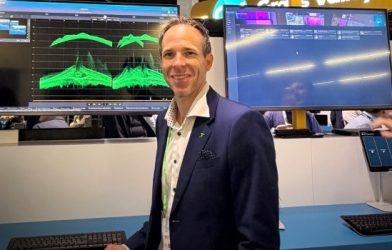
A leadership change in a company always draws close attention. Grass Valley officially announced the appointment of Jon Wilson as the new CEO of the Canadian company on April 5th, making headlines across the industry at the very start of NAB.
The timing of the announcement clearly reveals that this move had been in the works for some time. Louis Hernandez Jr., owner and Executive Chairman of Grass Valley, has played a key role in the process and will continue to be a central figure in shaping the company’s long-term strategy.
Jon Wilson joined the company in late 2023, initiating a transition process that culminated in his appointment as CEO. Until now, he had been serving as President and Chief Operating Officer. “Unlike many CEO transitions that happen under pressure, this one comes from a position of strength — and it’s been a very smooth process,” Jon Wilson tells TM BROADCAST. “We actually announced it internally last September, so our team was already well aware, and we had also shared it with many of our customers. NAB was more of a formal introduction to the broader industry.”
With this new chapter beginning at Grass Valley, we speak with Jon Wilson about the core strategic lines that will define his leadership. We also took the opportunity to get his perspective on some of the major forces shaping the future of the sector, including the industry’s shift toward software, U.S. commercial policy, and the recent decision by Spain’s LaLiga to cut ties with Mediapro.
First, I’d like to hear your first impressions as the new CEO of Grass Valley. How are you feeling in your new role?
It’s been really great. Stepping into the role formally has been fantastic. One of the advantages I have is that, unlike many CEO transitions that happen under pressure, this one comes from a position of strength — and it’s been a very smooth process. We actually announced it internally last September, so our team was already well aware, and we had also shared it with many of our customers.NAB was more of a formal introduction to the broader industry.
Now that it’s official and I’m fully in the role, I feel re-energized. I’m excited to drive the business forward. What’s also encouraging is being able to reassure both customers and employees that there’s no major shake-up on the horizon. It’s really about building on the momentum of the past 12 to 18 months and continuing to expand the initiatives already in motion.
“If we’re talking about industry-leading innovation but can’t help our customers deploy it successfully, then even the best tech won’t matter”
What are these initiatives and strategic goals for the year ahead?
There are a few areas we’re focusing on. First, industry-leading innovation — which has been a pillar for Grass Valley for over 65 years. Second, operational excellence. Now that we’ve emerged from a transformation, we’re really focusing again on how we drive the business the right way.
Strategic partnerships are also very important. We’re looking at how to create win-win scenarios with our partners around the world — both through AMPP, by bringing more partners into the ecosystem, and also by reconnecting with long-time Grass Valley partners to ensure we’re aligned on how to win together.
And finally, it all revolves around customer success. Again, if we’re talking about industry-leading innovation but can’t help our customers deploy it successfully, then even the best tech won’t matter. That’s why we’re doubling down on customer success this year.
I also want to talk about the main challenges you’re currently facing as a company. One that comes to mind is the global uncertainty surrounding the new U.S. tariffs. How are these trade decisions affecting you, and what other major challenges are you dealing with?
First, I tend to view most challenges as opportunities — that’s just how I operate. That said, there are certainly challenges out there. For example, tariffs create more macro uncertainty. At the same time, we benefit from the fact that all our manufacturing today is based in Montreal, Canada, so our products currently fall outside the U.S.-Canada tariffs. That gives us a potential advantage.
We’re also being very transparent with customers about where we stand and what’s changing, which builds trust and appreciation. More broadly, when I look at the markets we serve, I see a real opportunity for Grass Valley to step back into a leadership position. We’ve always been a leader, but during our transformation over the past few years, we may have unintentionally stepped away from certain markets. Despite the uncertainty and variable growth rates, I believe there’s still significant room for us to grow.
“Sports rights fees keep increasing, talent fees are going up, and yet advertising dollars are shifting across platforms. That puts enormous pressure on our customers to become more efficient and more effective”

I’d also like to dive into your approach to global sports production. What’s your vision on how this segment is evolving, and how are you helping to drive that change?
It’s evolving very dynamically, which is incredibly exciting. Across the board, our customers are under increasing pressure to reduce costs and do more with less — and that’s not unique to our industry. But in media and entertainment, that pressure is intensifying. Sports rights fees keep increasing, talent fees are going up, and yet advertising dollars are shifting across platforms. That puts enormous pressure on our customers to become more efficient and more effective.
Technology is one of the ways to achieve that. Remote production, for example, is accelerating — COVID was a big accelerator in testing what’s possible, and that trend has only continued. Now, we’re seeing 5G come into play, and customers are exploring how to leverage it. They’re also looking to simplify workflows so customers can scale efficiently and operate profitably.
Grass Valley is very well positioned on these themes. Our product roadmap is closely aligned with where our customers are headed given the time our senior team, including myself, spend directly in market with customers.
“We benefit from the fact that all our manufacturing today is based in Montreal, Canada, so our products currently fall outside the U.S.-Canada tariffs. That gives us a potential advantage”
Would you say cloud technology is also contributing to this increased efficiency?
Absolutely — whether it’s cloud-based, on-prem, or hybrid. Everyone’s talking about cloud, hybrid, remote production, but the difference for us is that we’ve been investing in cloud-based technology — specifically AMPP — for over eight years now. It’s a commercially hardened and widely deployed product, and we’re now seeing customers use it across Tier 1 deployments. That momentum is only going to grow as more clients recognize that we have a proven, reliable solution that drives meaningful commercial benefits at scale.
Sticking with sports: there have been shifts in Spain recently, with the surprising decision of the national football league to choose HBS over Mediapro as a provider. How are you dealing with these kinds of changes?
First, I’ll say that Mediapro is an incredible long-term partner for Grass Valley, and we have a tremendous amount of respect for that relationship.
As a technology vendor, it’s our responsibility to support all of our customers globally. We hope to have the opportunity to work with HBS in their new deployment — we’ll see if that happens. These changes occur over time; different providers win different contracts.
At Grass Valley, we’re an enabling technology company — we’re not here to compete with managed or broadcast service providers. We’re here to help them succeed. And as such we want to continue supporting Mediapro, just as we do HBS, NEP, and others.
On the changes in Spain’s LaLiga: “As a technology vendor, it’s our responsibility to support all of our customers globally. We hope to have the opportunity to work with HBS in their new deployment”
Related to this, we’ve recently learned that HBS has partnered with NVP. What’s the scope of your partnership with this company?
We have a strong partnership with NVP. We’ve collaborated on some very interesting projects in Italy, alongside our partner Video Progetti, particularly around the Italian soccer leagues — across cameras, switchers and infrastructure. More recently, we’ve also worked together on AMPP-based production projects for Lega Pro. These are exciting collaborations that we’ve built together over time.
Beyond sports production, what do you see as the key areas of improvement your broadcast clients are requesting?
The recurring theme is cost savings and operational efficiency. Historically, many customers have tried to pick the best product for every individual application or workflow — but they’re realizing that’s not scalable. Now, they’re looking for partners who can help them consolidate their technology stacks and drive end-to-end efficiency. That often means a platform approach. For example, AMPP positions us strongly to deliver on that.
Customers aren’t just asking for 5–10% savings. They want, and need, meaningful reductions. We can deliver those, not only through AMPP, but also through our broader ecosystem — from cameras and switchers to infrastructure and interoperability with third-party products. That last point is critical — customers don’t want to be locked into a single vendor. Flexibility is key. We’re committed to that at Grass Valley, through initiatives like MXL with the EBU and others. We’re delivering on our promise of an open ecosystem.
I’d also like to hear your thoughts on some of the key trends shaping the industry. First, the convergence between the broadcast and IT worlds is a big talking point. What’s your view on this?
I think it’s great for our industry. There’s a lot to learn from IT — both in terms of mindset and technical expertise. At the same time, it’s important to recognize that broadcast is fundamentally different from traditional IT infrastructure.
What I’m hopeful for — and what I see happening more and more — is a convergence of the best minds from both industries, working together to figure out what the broadcast industry really needs. That’s our focus at Grass Valley. I don’t believe in swinging entirely to one side. We need to embrace the best of both worlds to move forward.
“Now is a really exciting time at Gras Valley as we’re operating with a renewed pace and purpose”
 Along those lines, the industry is shifting from hardware to software-based infrastructure. How do you see the future of software-based workflows in audiovisual production?

It’s only accelerating — especially at the high end of the market, where customers have the resources to invest in transforming their infrastructure. Our conversations with these clients are becoming more frequent and more focused. Today, even for top-tier productions, some workflows aren’t quite ready yet to handle the complexity and scalability entirely through software. But in the next one to three years, we expect most of those gaps will be addressed. Computing power continues to grow rapidly, and that will enable much more flexible production models.
Another hot topic is artificial intelligence. How are you integrating AI into your product portfolio?
We’re integrating it thoughtfully. It’s becoming an increasingly important conversation within Grass Valley — everyone wants to know what we’re doing with AI. We’re focusing especially on our asset management products, like Framelight X on AMPP. There’s a huge opportunity to use AI in ways that are practical and truly beneficial for our customers.
A good example is metadata tagging — identifying objects, people, and so on. That’s one of the early applications we’re already implementing, and I expect that use of AI will only expand moving forward.
To finish, I’d like to ask about the future. Are there any innovations, developments, or projects you’re currently working on that you’d like to share?
Yes — lots of exciting things. At NAB, we showcased several new developments. One of the highlights is our new filmic-look camera, the LDX 180, which will be shipping later this year. The market response has been overwhelmingly positive. We’ve also introduced a new mid-tier switcher, the VXP. What’s great about both the LDX 180 and the VXP is that they integrate seamlessly into the Grass Valley ecosystem. They’re not standalone products with different interfaces — they’re part of our unified approach to technology development.
On the AMPP side, we continue to refine our applications for commercial deployment, and some of the world’s largest customers are already adopting them. That’s where our focus will be in the coming months.
Looking ahead, what excites me most is our ability to move quickly with innovation while staying laser-focused on delivering the highest quality products. At the end of the day, customer success is what everything revolves around.
“Some workflows aren’t quite ready yet to handle the complexity and scalability entirely through software. But in the next one to three years, we expect most of those gaps will be addressed”
Is there anything else you’d like to add to close the interview?
Just over a month into the new role, and I remain incredibly energized about the opportunity in front of us. Grass Valley is in a fantastic position. We’ve been an industry leader for over 65 years and now is a really exciting time at GV as we’re operating with a renewed pace and purpose to lead the media revolution.
Personally, I’m focused — and we as a team are focused — on building the culture we want at GV, aligning everyone on where we are and where we’re headed. We’re already seeing the impact of that, and I expect the momentum to keep growing. I hope our customers are seeing it too — a new Grass Valley they maybe haven’t seen in recent years.





Comments are closed