


RAI’s Director of Technology, Ubaldo Toni, together with his team, answers all our questions. We review the current technological status of Italy’s public broadcaster—now undergoing a deep transformation—and its main investment priorities. The interview also offers broader insights into the future of the broadcast industry


*This content is included in the July issue of TM BROADCAST. You can access the full magazine here.
A change of cycle at RAI. The retirement of its CTO, Stefano Ciccotti—a story exclusively reported by TM BROADCAST—opens a new chapter for the Italian public broadcaster. As of the publication date of this issue, Rai has not officially confirmed how its final organizational structure will look. It’s worth noting, in any case, that the various business units within the public corporation—due to the vast scope of its activities—already enjoy a considerable degree of operational autonomy. Over the years, the CTO position has taken on a more institutional character within the company.
This makes it an ideal moment to take stock of RAI’s current situation and to explore the key elements of its technological outlook for the years ahead. Helping us in this task is Ubaldo Toni, Director of Technology, who has brought together his senior technical leadership team to exclusively answer all our questions.
This article is part of a series exploring the main public broadcasters across Europe. In recent issues, we have focused on the Nordic countries, featuring interviews with the technical heads of Sweden’s SVT, Denmark’s TV 2, Iceland’s RÚV, and Norway’s NRK (you can access the articles through the links). As a side note, Ubaldo Toni mentioned that he had read these pieces and that the ambitious upgrades carried out by SVT and TV 2—which he personally visited—once served as a source of inspiration for RAI.

In addition to Ubaldo Toni, the interview also includes contributions from Nino Garaio, Head of Digital Production Systems; Fabio DiGiglio, Deputy Head of Digital Production Systems; Stefano Marchetti, Head of Platform Engineering; Guglielmo Trentalange, Head of Studio Networking Systems; Andrea Menozzi, Head of Infrastructure Engineering; and Riccardo Rombaldoni, Head of Content Production Engineering.
As for RAI’s general organizational structure, it is important to highlight that the “Direzione Tecnologie” led by Toni is primarily focused on television production systems and media-related IT infrastructure. The scope of this interview has therefore been limited to that area. Other domains are managed by separate business units: “Reti e Piattaforme” oversees OTT services, non-linear media, and DVB-S/DVB-T distribution; “ICT” handles corporate-wide IT and networking outside the media domain; CRITS (“Centro Ricerche Innovazione Tecnologica e Sperimentazione”) is responsible for R&D activities; and “Direzione Produzione TV” manages the operational aspects tied to major events such as the Sanremo Festival.
With four production centers, 17 regional offices, around 2,000 journalists, and dozens of linear channels, RAI stands as one of Europe’s leading broadcasters. It also holds an extensive content archive, dating back to 1924 for radio and 1954 for television.
Currently, the corporation is undergoing a major transformation. “We’re shifting from broadcaster to media company so we are developing a multi-year, multi-million-euro innovation plan to support this transition,” explains Ubaldo Toni. “We are steadily moving toward a fully IT- and IP-based architecture, though completing the full transition will take another four to five years.”

“A large-scale shift to UHD would involve significantly higher costs — for example, storage requirements can increase fourfold — so we enable full UHD functionality only where and when it is truly needed”
Have you implemented any recent technological innovations or upgrades that you would like to highlight?
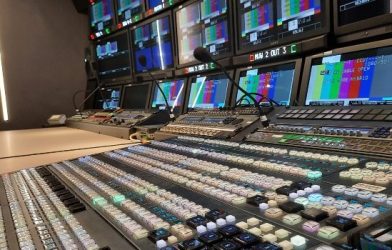
In recent years, we completed the renewal of the production infrastructure of one of our major RAI Production Centre in Rome (Studi Nomentano). This facility includes six medium- to large-sized studios (ranging from 380 to 1,500 sqm) dedicated to entertainment programs, five control rooms equipped with HD/UHD-12G-ready technology, a central SMPTE 2110 IP-based routing system, post-production facilities with centralized storage, and new LED-based lighting systems that have reduced energy consumption by 80%.
We also recently completed a full overhaul of our national news production systems, transitioning from a traditional IT environment to a private cloud. This cloud infrastructure features state-of-the-art technology, both at the application level — using AVID MediaCentral Cloud UX — and the hardware layer, which is built on Dell and VMware hyperconverged virtualization. As a result, we’ve reduced energy consumption by 60%, while continuing to serve over 800 journalists, who now benefit from fully effective remote working capabilities.
What is your current technological landscape when it comes to the transition from SDI to IP on the production side?
We began introducing SMPTE 2110 IP technology where we saw clear benefits, not simply to follow industry trends. In the live production area, we didn’t find compelling technical or economic reasons to be early adopters of the 2110 standard. As a result, most of our newer live production systems are based on 12G SDI UHD/HDR, while SMPTE 2110 is used primarily to optimize signal distribution and enable shared use of resources across different studios and control rooms. We believe this hybrid approach has been the best choice in terms of reliability, sustainability, investment efficiency, maintenance costs, and operational effectiveness.
RAI has been a pioneer in adopting UHD. Could you summarize your current position and the main challenges you foresee in this area?
On the production side, we have primarily invested in OB vans, as they are typically used for premium events that may be sold or distributed internationally, where UHD quality is often required. Our long-term infrastructure projects are also designed with UHD support in mind.
However, a large-scale shift to UHD would involve significantly higher costs — for example, storage requirements can increase fourfold — so we enable full UHD functionality only where and when it is truly needed. We particularly value flexible licensing models (e.g., for high-end cameras) that allow UHD capabilities to be activated on a usage basis.
On the distribution side, Rai launched its 4K channel in 2016, broadcasting free-to-air on the Tivùsat digital satellite platform. The channel is used to air UHD versions of major live events (such as the Opening of the Holy Door) and other premium content. These broadcasts are simulcast with HD versions on our premium HD channels and are also available via streaming on HbbTV-compatible devices.
In relation to this, could you provide an overview of the current state of the transition to UHD in the Italian television landscape?
UHD is steadily gaining ground in high-end production, particularly for premium events and some scripted content. However, its broader adoption is still limited by distribution challenges. In Italy, DTT remains the primary delivery platform, and even with T2-HEVC, there isn’t sufficient bandwidth to support UHD broadcasts terrestrially. Satellite is also used, but its reach is limited. Broadband distribution remains costly due to high CDN expenses, and fiber-to-the-home coverage is still not widespread across the country. At this stage, large-scale investments in UHD are not justified by the potential for additional revenue.
“AI has recently been adopted to enhance processes related to media accessibility. It is currently used to assist with batch preparation of subtitles and is being tested for automatic transcription of live events”
Are there any interesting projects or upgrades in the near future that you can share with us?
We’ve just entered the executive phase of the Rai Sport digitization project. The goal is to connect our sports channels and newsrooms in Rome and Milan to the existing Avid infrastructure, while integrating EVS equipment to create a fully streamlined workflow for event coverage and sports news production. The project is expected to be fully implemented within two years.
In addition, we are about to launch a proof of concept (POC) for studio automation in our regional news operations.
In news or sports production, graphics are a key element. In this regard, how do you approach this area, and to what extent are you using immersive technologies or augmented reality?
We are currently using immersive technologies and augmented reality in several studios in Milan, primarily for sports programming, as well as in Rome for other popular TV programs and documentaries. We have also planned further investments in this area to expand and enhance our capabilities.
I’d like to know a bit more about the key elements of your studios and facilities. Have you recently acquired any significant equipment? Which manufacturers do you usually rely on?
We have recently carried out significant upgrades in our TV studios through public tenders for key technologies. This year, we plan to sign several framework contracts for equipment such as UHD video switchers, studio cameras and lenses, PTZ cameras, ENG cameras, and broadcast monitors.

On the infrastructure and control side, we typically rely on both Utah and Riedel’s MediorNet distributed video routing systems, as well as the Lawo VSM broadcast control system. We are also planning investments in technologies aimed at significantly reducing operational and energy costs — including LED walls, LED floor systems, LED lighting, and, last but not least, virtual set systems.
Among the events RAI has recently covered, could you share a specific success story you’re particularly proud of — one that stood out due to the challenges it involved?
I guess “ Sanremo Festival 4k” and “ Eurovision Song Contest” in Turin, but as this questions relates to operational events managed by a different business unit, I may not be able to answer.

“This year, we plan to sign several framework contracts for equipment such as UHD video switchers, studio cameras and lenses, PTZ cameras, ENG cameras, and broadcast monitors”
What would you say is the current state of 5G adoption in the Italian broadcast industry and within your workflows?
We are running extensive tests, using either public networks, or private “5G bubbles” in some events. This is still an R&D matter for us, so for detailed information RAI CRITS (Centro Ricerche ed Innovazione Tecnologica) should be contacted for further details.
How are you adopting artificial intelligence and process automation in your workflows? How do you see its influence in the near future?
AI has recently been adopted to enhance processes related to media accessibility. It is currently used to assist with batch preparation of subtitles and is being tested for automatic transcription of live events. More broadly, we see AI as increasingly valuable in improving the performance of production tools, which in turn will help boost overall productivity.
What is your level of confidence in and adoption of cloud technologies compared to on-premise systems?
On-premises systems, while requiring a significant upfront investment, offer predictable costs and greater control — which is essential for a public broadcaster like RAI, given our strict compliance and security requirements.
That said, it’s clear that cloud technologies offer unique advantages, particularly in terms of flexibility and scalability.
We see a hybrid approach as the most effective strategy — one that leverages the strengths of both cloud and on-premises solutions to address specific business needs.
For example, we see clear value in beginning to support RAI’s program delivery partners with ingest and QC file services configured in the cloud. This allows us to reduce feedback latency regarding the technical compliance of media assets and to scale delivery operations during peak periods throughout the year.
However, we have no plans to move our program archive to the cloud. Too many questions remain open around content rights, security, and content management — particularly when relying, even partially, on major providers such as AWS or Azure.
This also ties into the broader issue of the digital divide. A cloud-based platform requires stable and high-speed network connectivity, especially for post-production workflows. Unfortunately, that level of connectivity is not always guaranteed — particularly in scenarios where cloud processing would be most beneficial, such as special outdoor productions or major sporting events like the Giro D’Italia bicycle competition.

“We see a hybrid approach as the most effective strategy — one that leverages the strengths of both cloud and on-premises solutions to address specific business needs”
What is your vision for the transition of the broadcast industry to a software-based infrastructure?
The transition to software-based infrastructures is progressing rapidly, driven by advances in artificial intelligence, cloud computing, and IP-based workflows. Our objective is to harness the potential of software to achieve more flexible, scalable, and efficient operations.
At the same time, it’s essential to maintain the reliability and security that have traditionally characterized broadcast environments.
An equally important focus for us is the training of engineers. Their skillsets must evolve to meet the growing complexity involved in managing and administering software-based systems.
Would you like to add anything else?
An equally important focus for us is comprehensive training across all levels — from project and system design to operations and maintenance. As we adopt more complex, software-driven infrastructures, it’s critical that all teams involved are well-prepared before systems go live. Engineers must understand not only the underlying architecture, but also how to configure, operate, and troubleshoot new technologies effectively. Likewise, operators need to adapt to evolving workflows, and maintenance personnel must be equipped to handle updates, integration issues, and long-term support. In our view, investing in training ahead of final release is not optional — it’s a key success factor for ensuring reliability, minimizing downtime, and securing a smooth transition to next-generation broadcast systems.
Technology is rapidly and relentlessly transforming professions and duties. A change of mind is needed from the old way of “creating” television to the new one, involving not just engineering matters part but also the operation, professional training and human resources side.
This works with media companies but also to suppliers who find themselves facing the same challenges, even in the recruitment of new talents and consolidated professionals in the sector.
That old “niche” made of companies and technology suppliers is disappearing and we can oversee on the horizon, even in the media/broadcast world, the big IT market players such as Amazon, Microsoft, Huawei, Nvidia, Meta with their impressive economic power and resources.
RAI PBS, in this context, adds an additional point of complexity as it is subject to the “Italian procurement code” by virtue of which it must plan its technological investments with extreme caution and precision, in a complex and extremely competitive context in Italy and Europe.

“An important focus for us is the training of engineers. Their skillsets must evolve to meet the growing complexity involved in managing and administering software-based systems”
The future of TV in two takeaways:
“A change of mind is needed from the old way of “creating” television to the new one, involving not just engineering matters part but also the operation, professional training and human resources side”
“That old “niche” made of companies and technology suppliers is disappearing and we can oversee on the horizon, even in the media/broadcast world, the big IT market players such as Amazon, Microsoft, Huawei, Nvidia, Meta with their impressive economic power and resources”




Comments are closed