


We interview the Chief Executive Officer of this iconic company —which Stiefel joined more than 30 years ago— to discuss his market vision and Telos’ strategic plans, defined by the establishment of new alliances and the opening of emerging markets


*This content is included in the September issue of TM BROADCAST. You can access the full magazine here.
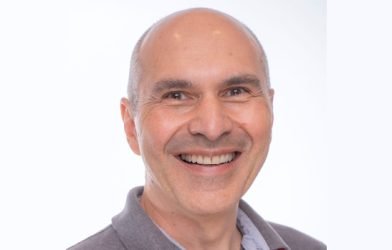
“An engineer who has moved into an executive role.” That’s how Scott Stiefel, CEO of Telos Alliance, describes himself at one point in our conversation. He has dedicated his entire professional life to this company, which he joined straight out of university. With more than three decades of experience, there is no one better suited to talk about the strategy of this industry reference… and about how the market has evolved over this time. For that reason, we are delighted to welcome him to our Industry Voices section, a space reserved for the most relevant professionals and companies in the sector.
Reflecting on the technological transformation that the audio industry has undergone over all these years, Stiefel points out that the central element has been the “invention of audio over IP”: “That’s the glue that connects everything.”
One of the defining traits of Telos Alliance is its approach to partnerships. In fact, the company has just announced —coinciding with IBC— a collaboration with Jünger Audio, for which it serves as exclusive distributor, and TVU Networks, with the goal of integrating its cloud-based audio solutions directly into TVU’s MediaMesh platform.
Another strategic focus for Telos is the opening of new markets beyond traditional broadcast, as Stiefel reveals: “We’re actually making a fairly concerted effort with our business development team and executive team right now to seek out and research prime markets where we can push our products and technology into solutions that haven’t traditionally been part of Telos.”

The industry’s transition toward software-based models, as well as the challenges posed by different regulations —with the new U.S. trade policy in the background— are also among the topics discussed.
Here is the interview:
To begin with, I’d like to know how you would describe the recent evolution of Telos Alliance.
We have always been in a constant state of evolution since I joined the company in 1994. Right now, over the past few years, our focus has been on refining our product offerings across all the different areas in which we provide audio products, both for television, radio, and beyond—primarily delivering the value of those products in different formats.
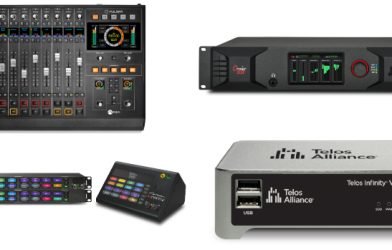
So, we started as a traditional hardware company, and we still have a sizable customer base that demands hardware appliances. But over the past eight or nine years, we’ve been migrating the software out of those products into server applications. Most recently, we’ve been putting them in small form factor PCs as a stepping stone to software adoption as well as delivering them as pure software solutions so that customers can run them on their own hardware.
And then finally, through cloud services like AWS and Google. Another area of our evolution where we’ve had a lot of growth is in our professional services. What we’ve found is that in the migration to software and cloud, many of our customers have a tremendous variance in their ability to utilize those services and in their familiarity with modern IT infrastructure.
So, we’ve also had an opportunity to grow in that area by providing professional services to help them implement our products, configure them, and then monitor and control them as they move forward.

“We have some of the best partners in every region and we work in partnership with them. They bring the changing regulations to us, we develop products that adhere to those standards and regulations, and they help us with testing, implementation, and certification”
We will discuss the software transition a little bit later, but first I’d like to know how you see the current landscape in broadcast audio processing, and what you would say sets Telos Alliance apart from its competitors in this scenario.
In terms of audio processing for the video market—television and multimedia—we market products under two brands: both Jünger Audio and our Linear Acoustic brand. Each of them focuses on different areas of the market, or at least on customers with different demands and workflows.
The way we maintain our leadership position in both of those brands is by implementing all of the modern offerings for audio formats, including MPEG-H, AC-4, and Dolby Atmos. Through our relationships with those suppliers, we’re able to stay right at the forefront of all the technological advances in audio processing for the video market.
In the radio, pure audio, and streaming audio markets, we primarily market our products under the Omnia name. We have never stopped innovating in that area, particularly in helping clients create a signature sound more easily.
So, balancing the demand for modern features—things that go beyond audio processing itself, such as automation, RDS, and metadata—and integrating that with our continuous innovation in audio processing is how we maintain our leadership there.
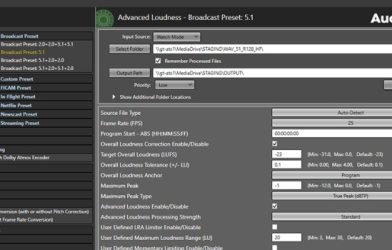
Finally, the third leg of the stool is our file-based audio processing. Under our Minnetonka Audio Software division, we have a product called AudioTools Server. What we can do is offer all of those audio processing solutions—whether it’s the Jünger sound, the Linear Acoustic sound, or the Omnia sound—to our file-based customers. This way, media companies that deliver both on-demand as well as streaming and real-time over-the-air content can achieve the same consistent sound across all of those platforms by coming to Telos, because we can offer a very customized solution for whatever sound they are looking to tailor. This is a significant advantage that our clients have in that file based and over the air content is consistent.
Related to this, are you planning to expand or redefine your technological alliances to reinforce your leadership, or not at this moment?
We’re always looking for best-in-class partners. As more and more of the broadcast and media industry migrate—especially to integrated cloud workflows—they need a menu of functions within a production platform.
What we’ve found is that through partnerships with companies like Grass Valley and Vizrt or through discussions with other large companies like Ross, we can provide technology such as our virtual intercom platform integrated into their live production platforms. Our audio processing solutions, through both Jünger and Linear Acoustic, have also migrated into these seamless production platforms produced by companies like LiveU.
So, on the demand side, we continue to find partners to integrate our technology on an OEM basis. On the supply side, we continue to grow our partnerships with companies like Dolby, the Fraunhofer Institute, and other technology providers to bring their technology into our products. So, really, on both ends of the supply chain spectrum, we have created partnerships and continue to look for new ones.

“The remarkable thing has been watching the evolution from custom hardware rack-mount boxes to the ability to create the same content—or even better content—much more flexibly, using the same intellectual property but now expanded into virtual and cloud-based environments”
You mentioned the transition to software-based models. In this context, where software is gaining ground over hardware, how do you plan to balance growth across these areas, including services such as Telos Care Plus?
We started this migration decades ago. In the early 2000s, we began migrating our products from highly customized DSP chip-based designs to running the same algorithms on off-the-shelf Intel-based motherboards and other compute platforms, knowing that someday in the future those platforms would become powerful enough to run very high-density solutions.
For instance, multiple instances of an Omnia audio processor could run on a server, instead of having one large box that ran a single instance of a stereo audio processor. We began that process around 2001 or 2002 with our first Intel-based audio processing and mixing engine.
Since then, we’ve had this continuum of products where we still target appliances for our traditional hardware customers, but those appliances are actually based on Intel or other motherboards, which we then surround with the hardware people expect in an appliance. At the same time, the software is written so it can be quickly extracted and run on a server. And in the past five years or so, we’ve been able to containerize these products so they can run in virtual environments, create multiple instances in server farms, and run in cloud.
The good news is that all of the modules that create the value in those products—whether it’s audio processing, mixing, or communications—exist in every single form in which we deliver our products. And this has been a continuous transition since the early 2000s.
In terms of how the company has changed, we’ve had to continuously adapt our business models to support software sales and licensing, on-premises license servers, remote license servers, and services like our Spotlight server or our ZIP server for NAT traversal for codecs.
So, we’ve been migrating more and more to the software side without giving up any of our strengths in the hardware world. We have world-class partners that manufacture our hardware, and we also have an in-house manufacturing group that continues to supply these appliances.
And what about the Telos Care Plus?
Telos Care Plus integrates with our professional services group. It’s a service we offer because, even with our hardware products, they are all software-based. The primary value of those products—whether it’s a pure software product or a hardware product—is really the software running inside them. So, to allow customers to take advantage of the continuous evolution of that software, we offer a Telos Care Plus SLA that keeps customers always up to date with the latest software features, patches, security updates, and so on.
And finally, on the professional services side, we offer the ability to custom configure your software, help you implement it—whether in the cloud or on your server—and provide ongoing maintenance as well.
I’d also like to explore your vision of the current global uncertainty shaped by new commercial restraints. How do you address the challenges of different regulations, infrastructures, and customer needs?
This is also something that, since I joined the company in 1994, has been a central issue. The first product I worked on was an ISDN telephone-based MP3 codec. And ISDN existed in different formats, subject to different regulations around the world.
In order for us to sell that product in North America, Europe, and Asia, we had to become familiar with all of those different telephony formats, the regulations, and the standards that each region adhered to. So, from the earliest days of Telos, we have developed key relationships with our distributors and system integrators around the world.
We have some of the best partners in every region—whether it’s Broadcast Bionics in the UK, AVC in the Pacific Rim, or others—and we work in partnership with them. They bring the changing regulations to us, we develop products that adhere to those standards and regulations, and they help us with testing, implementation, and certification.
By building these key partnerships, we provide value through our technology and innovation, while they provide value through their position at the center of each region, keeping us informed of all the regulatory changes. In the early days, it was telephony regulations. Then it became IP and cybersecurity standards. More recently, there have been ecological standards we’ve had to meet.
And again, our partners in all these different territories help inform our product development and ensure adherence to these evolving standards.

“So, we’ve been migrating more and more to the software side without giving up any of our strengths in the hardware world”
Could you share recent client examples or use cases where Telos technology has made a significant difference?
I came up with four very recent use cases that highlight different areas of our products.
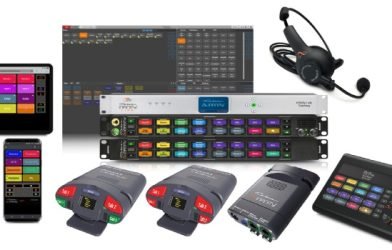
The first example—and I don’t want to use customer names—involves a very large international broadcaster in Europe who utilized our cloud-based Virtual Intercom Platform, or VIP. It assisted them greatly in the production and broadcast of the Summer Games. It was a tremendously scalable implementation of this cloud-based communication system, and it proved transformative for them.
Another major case study from the past two to three years involves one of the largest US-based non-traditional audio broadcasters. They completely updated their internal infrastructure to a fully software-defined, dynamic, metadata-enhanced audio router for hundreds of audio channels. That system was co-created by Telos and is still continuously evolving. We remain very involved in the development of that program, adding features. And because the intellectual property in that system was created by Telos, it is now commercially available to other customers worldwide, even though it began as a highly customized development.
The third case highlights a different application of our technology in terms of market. Our traditional market has been broadcast. But this was an e-sports company that creates programming using globally distributed teams for events all over the planet. They are producing the content and providing commentary virtually, but they need to communicate in real time—commentators, production staff, distribution teams—all not co-located.
So, again, using our Infinity VIP system, which is very scalable, cloud-based, and can also be used on demand, they have now implemented it for all their production teams globally, enabling the creation of each event as it unfolds.
And finally, the fourth case comes through two of our partners: Broadcast Bionics in the UK and AVC in New Zealand. We provided a completely IP-based hybrid virtual and hardware system on a national scale to one of the largest broadcasters in the Pacific Rim.
They are completely changing the paradigm of how they both produce and distribute content. Using our IP infrastructure—both on the hardware side with our IP-based consoles, and on the virtual side with VIP and our virtual telephony products—we delivered a seamless solution that allows them to scale up and provide an entire national infrastructure for their broadcast operations.
You mentioned e-sports, and I found it a very interesting point. Do you see new opportunities for growth beyond broadcast, such as e-sports or other forms of entertainment?
Yes, in fact, we’re actually making a fairly concerted effort with our business development team and executive team right now to seek out and research prime markets where we can push our products and technology into solutions that haven’t traditionally been part of Telos.
This includes live event production, and e-sports is another. We’re also looking at Houses of Worship, because those tend to be very temporal productions. Again, scalability—the ability to instantly define, for instance, a virtual intercom platform and then tear it down at the end of an event—is very interesting to us.
And there are a few other areas as well. We’ve already started playing in some of those markets, primarily through our Infinity IP-based intercom system. That has opened all sorts of interesting doors, including a racetrack use case where we provided communications for race marshals monitoring an auto racing track in real time. We had that opportunity. I already mentioned the e-sports production, and we’ve looked at a few other areas as well and had some success outside of broadcast.
Would you like to add anything else to be included in the interview?
I guess the only other thing is this: from my perspective—having joined the company 30 years ago right out of college as an entry-level junior engineer working on an ISDN card for one of our products—it has been incredible to witness the evolution.
In the late 1990s, we began work on our first audio-over-IP system, called LiveWire®, which has now proliferated throughout the broadcast industry. We participated in the creation of the AES67 standard, which incorporated a huge portion of our LiveWire technology into that standard. And now, audio over IP is ubiquitous in the media industry.
The remarkable thing has been watching the evolution from custom hardware rack-mount boxes to the ability to create the same content—or even better content—much more flexibly, using the same intellectual property but now expanded into virtual and cloud-based environments. You can now instantiate incredibly complex, scalable workflows and then tear them down as needed.
And all of that was really enabled by the invention of audio over IP. That’s the glue that connects everything. So, from my perspective as an engineer who has moved into an executive role, watching the impact of a technology we helped pioneer—and how it has shaped the way all media is created today—has been a fascinating journey over the past 30 years.

“In the migration to software and cloud, many of our customers have a tremendous variance in their ability to utilize those services and in their familiarity with modern IT infrastructure”



Comments are closed