


For much of its early development, virtual production was associated with large-scale projects. However, this is changing as the technology finds its place in advertising, music videos, branded content and short-form narrative productions, according to a statement issued by Blackmagic Design.


Part of this shift is due to greater accessibility, but also to a better understanding of when virtual production makes sense.
For Neon Vision, a German production company specialising in commercials, music videos and virtual production, this has meant moving away from the idea that virtual production itself is the solution. “At the beginning, we tried to use one approach for every type of production, and that was a mistake,” says Florian Wolf.
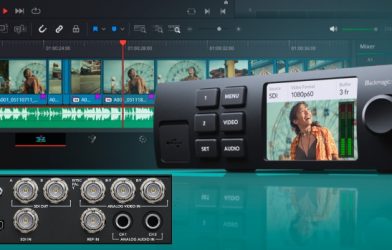
Neon Vision now combines background footage, LED screens, green screens and AI-generated images, depending on each project’s requirements. The company has also incorporated a Blackmagic PYXIS 12K digital cinema camera and an Ultimatte 12 4K device to create real-time composites as part of this flexible production workflow.
“When we started, virtual productions were large and expensive,” Wolf adds. “Over the last five or six years, we have learned how to achieve productions of a similar quality at a fraction of the cost.”
Choosing the right approach
Neon Vision generally begins each project by considering whether it would make more sense to capture certain elements using practical effects on location.
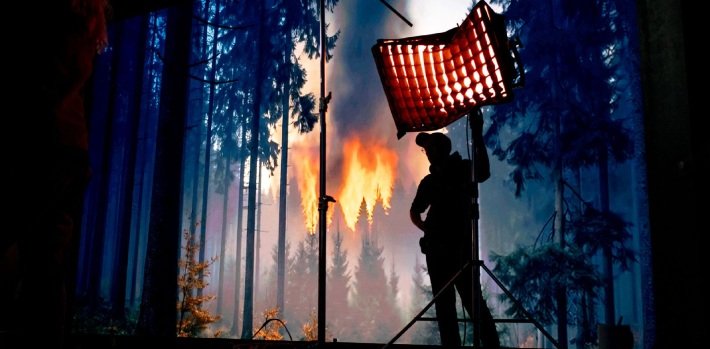
“Using background footage filmed in real locations is always our preferred option,” says Wolf. “And if that is not enough, we can extend it. For example, if we need trees on fire, we do not have to set them alight for real. We can shoot footage of a forest and then add the flames using AI or in post-production, rather than having to generate everything from scratch.”
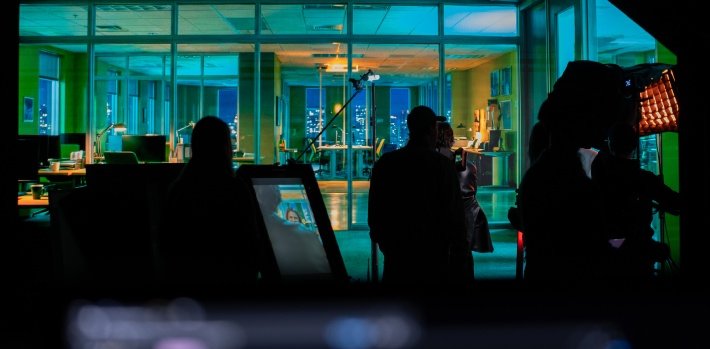
The same reasoning applies in the studio. Green screens remain useful, but Neon Vision distinguishes between two different ways of working with them. The background can be replaced later through an AI-assisted workflow, leaving compositing until post-production. Alternatively, the foreground can be combined with 2D or 3D backgrounds on set using an Ultimatte 12 4K, allowing the team to see the composite in real time during filming.
For the director, camera crew and client, this means they can see how the foreground and background elements interact on set. Maximillian Gillich, from Neon Vision, describes this as an effective and cost-efficient option for many productions that do not require a full LED volume workflow.
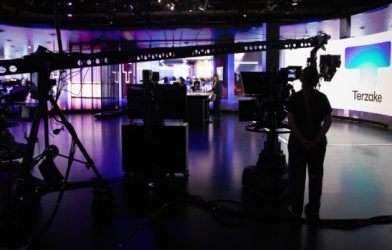
“Using LED screens does not automatically mean creating a tracked 3D environment in Unreal Engine,” he explains. “Around 80% of the work Neon Vision does with LED screens involves 2D backgrounds, such as real footage, AI-generated material, photographs or videos. Real foreground elements can help connect physical and virtual spaces, particularly when camera movement is relatively limited.”
“This is a different approach from the technically complex virtual production workflows that first brought the technology to public attention,” says Gillich. “Production teams can decide where that additional complexity adds value and where a simpler solution will suffice.”
A single camera platform
Switching between these approaches places different demands on camera equipment. The same system may be used to capture footage on location before moving to a green screen, a virtual production stage or a conventional shoot.
For Neon Vision, the PYXIS 12K is suitable for all these environments, from capturing background plates on location and driving scenes to green-screen and LED-screen productions.
“You have one sensor, one image and one look,” says Wolf. “This allows you to create the story from beginning to end with a single system.”
The camera’s sensor cropping feature also gives Neon Vision the flexibility to change resolution without altering the framing of the shot. “It does not always have to be 12K,” Wolf explains. “Whether we shoot in 4K, 8K or 12K, we still use the entire sensor, so the field of view remains the same. We can choose the resolution we need for the shot without having to rethink which lens to use.”
“We choose to shoot in 12K for background footage and in the studio as well,” Florian adds. “When using green screens, we want the highest possible resolution because it gives us more information for compositing. With LED screens, having reference signals for synchronisation is essential. And because the camera is so compact, we can mount it on a gimbal, place it in a car or take it on location to shoot footage. It fits in a backpack, so it is easy to transport.”
In a recent vertical-format narrative production, Neon Vision used a combination of 12K footage shot on location, AI-extended sequences and backgrounds generated entirely with AI, which were displayed on the virtual production stage.
“Sometimes we were trying to complete between 10 and 15 minutes of scripted dialogue in a single day, which is a lot of material when you consider the coverage and multiple takes involved,” Wolf continues. “Shooting everything in 12K RAW meant that, in some cases, we could avoid filming separate extreme close-ups and instead crop wider shots to create vertical content for social media. A wider 12K shot might look sharp overall, but if the person is not perfectly in focus, that becomes obvious when you zoom in.”
Putting it into practice
For one sequence, Neon Vision needed to film an actor running through a forest on a virtual production stage. Rather than creating the environment using computer-generated imagery, the production team took the PYXIS 12K to a location and recorded a 12K RAW sequence while moving on an electric longboard.
The footage was then played back on the LED surface behind the actor on the stage, while real branches were added in the foreground to make the sense of movement more convincing.
“It looked a little strange on the stage at the time, but in the end it worked perfectly,” Florian recalls.




Comments are closed