


In the area of robotic camera control, AI is helping us develop products that can track on-screen talent more accurately while also enabling our camera trolley systems and OmniGlide robotic studio camera rover to start and stop more precisely. This is important as AI-assisted automated camera operation frees up camera operators to focus on other tasks


*This content is included in the August issue of TM BROADCAST. You can access the full magazine here.
By Michael Cuomo, Vice President at Telemetrics, Inc.
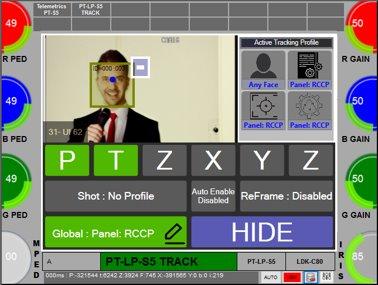
For talent tracking, AI can also automatically adjust zoom levels and camera angles based on the scene dynamics, ensuring the subject remains well-framed even if they move closer or further away. This is a key component of our reFrame talent and object tracking software, built into the Telemetrics RCCP-2A Studio control panel. We use AI to recognize faces and ensure optimal framing of the subject by consistently maintaining precise framing and tracking, even during live broadcasts.

We’ve also developed ultra-wideband (UWB) sensors for reFrame that can be affixed to a person or furniture to protect talent and crew. UWB tracking leverages AI and machine learning (ML) to enhance its capabilities and provide more accurate and insightful data. While UWB excels at precise location tracking, AI and ML algorithms can help interpret the data from UWB sensors to understand movement patterns, identify objects, and even predict future behavior.

Another feature of the RCCP-2A controller is Pathfinding, which utilizes AI algorithms to learn patterns of movement in a studio, enabling the OmniGlide rover to safely navigate around studios, even when talent or set pieces are present.
All these features and more are yet to come are leading broadcasters and production studios to embrace robotic camera control in ever-increasing numbers. We expect the use of AI to continue to add value and operational functionality for our customers and we’re devoting a significant number of resources to implementing it across our products in unique and production-friendly ways.




Comments are closed