


Autodesk has launched its latest iteration of Design & Make software, focusing on enhancing collaboration and efficiency with new toolsets.


Ben Fischler, Director of Product Management, Content Creation, at Autodesk, emphasizes the significance of these developments: “Media and entertainment professionals truly represent creativity and grit. At Autodesk, it’s our job to fuel their success with better workflows so they can continue to craft incredible stories. Today’s updates reinforce our commitment to enabling our customers to collaborate better and work smarter by supporting open standards, strengthening our content creation tools, and unifying workflows and data across entire production pipelines.”
In response to the growing trend of co-development, Autodesk introduces OpenColorIO support in 3ds Max, LookdevX enhancements in Maya, and enhanced OpenUSD integration in both tools, with the aim of facilitating seamless collaboration across various tools, departments, and studios.
– OpenColorIO Support in 3ds Max: The new default color management mode in 3ds Max facilitates standardized color management, offering significant enhancements such as full integration with the VertexPaint tool and the ability to designate color space for output files in the Bake to Texture tool.
– LookdevX Enhancements in Maya: LookdevX, Autodesk’s material authoring plugin supporting OpenUSD, now boasts seamless material portability. New workflows include working within an active Maya session using native USD or MaterialX shading graphs, along with improved data structures for robust file I/O workflows.
– OpenUSD Improvements: 3ds Max USD 0.7.0 and Maya USD 0.27 introduce enhancements for interoperable and nondestructive asset creation, including importing animations such as animated lights, cameras, and BlendShapes, and improved prim manipulation using the Universal Manipulator.
– Hydra Enhancements in Maya: Significant enhancements to the Hydra viewer technology preview bring users closer to seamless viewport renderer integrations, along with the opportunity for plugin development on GitHub.
Maya and 3ds Max users can now achieve higher levels of productivity with new features such as the Smart Extrude tool, Motion Trail Editor, redesigned Dope Sheet, and improvements to existing tools like Retopology and Global Search in 3ds Max.
– Smart Extrude in Maya: A new Smart Extrude tool facilitates predictable and flexible mesh extrusion, eliminating the need for handling messy geometry.
– Retopology Enhancements in 3ds Max: Retopology 1.5 introduces significant speed improvements for optimizing asset geometry, reducing friction during modeling tasks.
– Redesigned Dope Sheet in Maya: The Dope Sheet undergoes a complete redesign, offering a user-friendly animation experience with the ability to create and switch between sets of commonly used animation controls for characters.
– Motion Trail Editor in Maya: Access all motion trail-related functions in a single location, reducing mouse travel and clicks for smoother animation workflows.
– Global Search in 3ds Max: Save time with Global Search, which provides a comprehensive list of tools, functions, commands, and settings with a simple keystroke.
– GPU Renderer Overhaul in Arnold: Arnold’s GPU Renderer receives significant improvements in startup time and rendering speed, allowing for faster rendering workflows.
Automating content creation with proceduralism
New procedural tools in Bifrost for Maya streamline content creation by automating repetitive tasks, freeing up resources and talent for more creative endeavors.
– Bifrost Ocean Simulation System (BOSS): BOSS, integrated into the Bifrost graph, offers procedural ocean simulation capabilities, supporting 2D foam simulations and geometry displacement for waves.
– Liquid Meshing: In-graph liquid meshing tools in the Bifrost graph simplify content creation workflows, designed to work seamlessly with imported .bif caches from Bifrost liquids in Maya.
Introducing Autodesk Flow: Elevating Media and Entertainment Collaboration
Autodesk Flow, the industry cloud for media and entertainment built on Autodesk’s Design & Make platform, aims to connect people, workflows, and data across the production lifecycle. Formerly known as ShotGrid and Moxion, Flow Production Tracking and Flow Capture respectively, offer enhanced features to streamline workflows and better connect creative teams from on-set through final delivery.
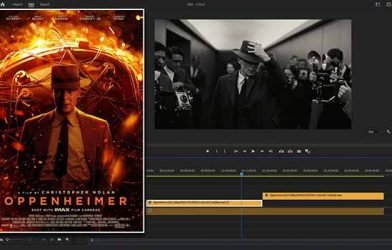
– Flow Capture: Users can expect a new, more intuitive UI and integration with Avid Media Composer, facilitating seamless collaboration between shooting and post-production teams.
– Flow Production Tracking: New AI-powered scheduling capabilities will soon be available, enabling studios to deliver projects on time and on budget with confidence.



Comments are closed