


Sveriges Television (SVT), Sweden’s public broadcaster founded in 1956, has always pushed the boundaries of innovation without abandoning its public service vocation. At the forefront of this technological transformation is Adde Granberg, SVT’s Chief Technology Officer, who brings more than three decades of broadcast technology experience to his role.


In a recent interview with TM Broadcast International, Granberg shared insights into SVT’s ongoing journey towards a more efficient, flexible and viewer-centric broadcasting model. From implementing cloud-based production solutions to developing in-house content delivery networks, SVT is embracing cutting-edge technologies to improve its operations and viewer experience.
Granberg’s vision for SVT’s future is clear: moving from hardware-centric to software-based solutions, prioritizing end-user quality, and leveraging artificial intelligence to democratize content creation. This conversation provides insight into the challenges and opportunities facing public broadcasters in an era of rapid technological change, and how SVT is positioning itself to remain relevant and influential in the evolving media landscape.
You have a wide experience in broadcast tech, I think, including outside vines. And can you tell us a little about the changes you’ve lived during your professional life?
It’s not that simple, I guess. My journey in broadcast technology has been quite extensive. It began in 1992 when we launched YouthTunnel in Sweden, which was intended to be the Swedish equivalent of MTV. I started as a sound engineer and later transitioned to video editing. Over the years, I’ve been involved with various production companies, including commercial ventures, event organizations, and OB truck operations where I was instrumental in building outside broadcast vehicles.
Throughout this period, spanning from 1992 to the present, the industry has largely maintained its traditional methods of operation. However, we’re now at a critical juncture. The advent of smartphones in the early 2000s initially didn’t significantly impact our industry, but that’s rapidly changing.
After more than three decades in this field, I believe we’re on the cusp of a monumental shift. The democratization of content creation, fueled by AI and smartphone technology, has revolutionized what’s possible. Tasks that were once the exclusive domain of professionals can now be accomplished by anyone with a smartphone. These devices have become all-in-one production studios, capable of filming, editing, graphics creation, translation, publishing, and even broadcasting from home.
This technological leap represents both a challenge and an opportunity for our industry. As professionals, we must acknowledge and adapt to this new reality. From my perspective, the broadcast production industry needs to evolve rapidly to remain relevant. We must embrace these changes and find ways to leverage new technologies to enhance our offerings. The alternative is to risk becoming obsolete in an increasingly dynamic and democratized media landscape.
SVT recently partnered with Agile Content to develop Ateliere Live. How do you see this cloud-based production solution changing SVT’s workflow in the coming years?
It’s a journey we just started, but the main focus with this cloud solution is the quality for the end user. Our partnership with Ateliere to implement Ateliere Live marks the beginning of a significant transformation in our production workflow. The primary focus of this cloud-based solution is to enhance the quality of experience for our end users. We believe that our viewers should be the ones setting the standard for production quality, not our internal production teams.
This shift represents a fundamental change in our approach. We’re moving away from a hardware-centric industry towards a software-based one. This transition allows us, for the first time, to truly prioritize the end user’s needs and expectations.
The beauty of this software-based approach is that it eliminates the need for specialized hardware to process video data. Instead, we can now use software running on standard hardware to achieve the same results, if not better. This not only provides us with more flexibility but also opens up new possibilities for innovation and cost-efficiency.
As well, this cloud-based solution offers substantial benefits in terms of environmental impact and operational costs. Our initial deployment for the Royal Rally of Scandinavia demonstrated significant reductions in both production costs and carbon footprint.
I really anticipate that this technology will revolutionize our entire production process. It will enable us to be more agile, responsive to viewer preferences, and environmentally responsible. We’re at the dawn of a new era in media production, and SVT is committed to leading this change, always keeping our audience at the forefront of our innovations.
The Royal Rally of Scandinavia broadcast using Ateliere Live showed significant cost and environmental savings. Can you elaborate on the specific challenges and successes you encountered during this implementation?
The implementation of Ateliere Live for the Royal Rally of Scandinavia broadcast was a significant milestone in our ongoing journey towards more efficient and sustainable production methods. We’ve been pioneering remote and home production since 2012, and this latest project represents a culmination of our efforts and learnings.
The success we achieved with Ateliere Live builds upon our long-standing commitment to remote production. This approach has allowed us to significantly reduce our environmental impact, optimize our investments, and streamline our workflows. As a public broadcaster, these cost savings translate directly into our ability to produce more content for our audience, which is crucial to our mission.
One of the key challenges we faced was adapting our existing infrastructure and workflows to this new cloud-based system. However, the flexibility it offers is remarkable. For instance, during the pandemic, we realized the full potential of this technology. If a host or technician fell ill, we could seamlessly bring in replacements from different locations without any travel requirements.
The Royal Rally broadcast demonstrated that we could take this concept even further. With a stable network connection, we can now potentially conduct productions from anywhere – even from our homes. This level of flexibility and redundancy is a game-changer for our industry.
Moreover, this shift towards software-based production aligns perfectly with the future we envision for broadcasting. It’s not just about cost savings or environmental benefits – though these are significant. It’s about reimagining how we create and deliver content in a world where technology is rapidly evolving and audience expectations are constantly changing.
The success of this implementation has reinforced our belief that cloud-based, software-driven production is the way forward. It’s allowing us to be more agile, more responsive to our audience’s needs, and more sustainable in our operations. As we continue to refine and expand this approach, we’re excited about the possibilities it opens up for SVT and the broader broadcasting industry.
How does SVT plan to balance the adoption of innovative technologies like Ateliere Live with maintaining traditional broadcast infrastructure?
Balancing the adoption of innovative technologies like Ateliere Live with our traditional broadcast infrastructure is a complex but necessary process. The good news is that the new infrastructure is generally more cost-effective, which allows us to gradually build it up and transition over time.
However, this transition presents significant challenges. It requires a complete shift in mindset, new support structures, and an entirely different business model. Moving from hardware to software-based solutions introduces a new set of challenges in terms of system stability, upgrade processes, and overall management.
This transition is particularly tricky because we need to maintain our 24/7, 365-day operations while simultaneously undertaking this transformative journey. Based on our current projections, I estimate it will take about three to five years to complete this transformation. This timeline accounts for not only the technical implementation but also the crucial aspects of staff education and adaptation to the new systems.
A significant part of this process involves training our crew and allowing them time to become comfortable with the new technologies. We also need to ensure the new systems are stable and reliable before fully integrating them into our critical operations.
I don’t see any alternative to this path forward. Embracing these changes is essential for SVT to remain competitive and efficient in the rapidly evolving media landscape. If I were to resist this transition, I’d be acting like an outdated, resistant-to-change CTO, which is certainly not my approach. Our industry is at a pivotal point, and it’s our responsibility to lead the way in adopting these innovative technologies while ensuring a smooth transition for our team and our viewers.
With the development of the Elastic Frame Protocol (EFP), how do you envision this open-source technology impacting the broader broadcast industry?
The development of the Elastic Frame Protocol (EFP) represents a significant shift in our industry’s approach to content delivery. While I can’t definitively claim it’s the future protocol, I believe its underlying principles are crucial for the evolution of broadcasting.
The key advantage of EFP lies in its focus on end-user quality and efficiency. Traditional protocols often introduce unnecessary overhead, but EFP is designed to minimize waste in the system. This aligns with our goal at SVT to prioritize the viewer experience above all else.
Furthermore, EFP embodies a broader trend in our industry – the move from hardware-centric to software-based solutions. This transition allows for greater flexibility and scalability, which is essential in today’s rapidly changing media landscape. However, it’s important to note that adopting new technologies like EFP isn’t just about the technical aspects. It requires a fundamental shift in mindset throughout the organization. We need to ensure that our teams, especially those managing these technologies, are equipped to handle this new approach.
Protocols like EFP are tools that enable us to better serve our audience. They allow us to focus on what truly matters – delivering high-quality content to our viewers in the most efficient way possible. As we continue to explore and implement these technologies, we always keep the end-user experience at the forefront of our decisions.
SVT has been transitioning to IP-based infrastructure. Can you update us on the progress of this transition and any unexpected challenges or benefits you’ve encountered?
Our transition to IP-based infrastructure at SVT is progressing, but it’s important to clarify that we’re focusing on IP in general, not specifically on SMPTE 2110. This distinction is crucial because SMPTE 2110 is a production industry standard that isn’t necessarily optimized for end-user needs, which is a key priority for us.
One of the main challenges we’re facing is the shift from hardware-centric to software-based production. This requires a significant transformation in our workforce and infrastructure. Our network and hosting personnel need to develop a deep understanding of broadcast demands, which is a new requirement for many of them. We’re also building a support organization capable of managing software-based systems rather than traditional hardware.
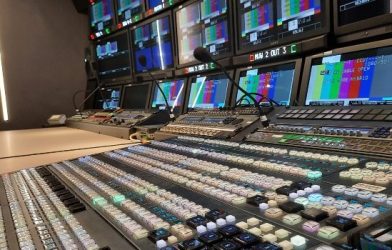
The biggest hurdle in this transition is the mindset change required at all levels of our organization. For instance, we’re reimagining user interfaces for production tools. Traditional vision mixers have numerous buttons and functions that aren’t always necessary for modern production workflows. We’re working on creating more intuitive, user-friendly interfaces that anyone can use, not just specialized engineers.
This simplification is challenging because we have many skilled professionals who are experts with traditional equipment. Now, we need to develop interfaces that are accessible to a broader range of users, potentially including myself. The goal is to make production tools as user-friendly as smartphones – you shouldn’t need to be an engineer to operate them effectively.
Ultimately, we’re striving to adopt the ease-of-use principles from consumer technology into our broadcast industry. This is a difficult but necessary evolution to ensure we remain efficient and relevant in the changing media landscape.
With the move towards cloud-based solutions, how is SVT addressing potential concerns about data security and sovereignty?
At SVT, we’re taking a multi-faceted approach to address data security and sovereignty concerns as we move towards cloud-based solutions. First and foremost, we’re developing our own on-premises cloud infrastructure. This allows us to maintain direct control over our most sensitive data and critical operations, ensuring we can manage security in the best possible manner.
Simultaneously, we’re investing significantly in building a robust IT security department. This is a new and crucial initiative for us, as we recognize the evolving nature of digital threats in the cloud environment. While it’s certainly a challenge, we’re not starting from scratch. We’re looking to industries that have already navigated these waters successfully, such as banking and automotive, to learn from their experiences and best practices.
It’s important to note that while we’re seeing cost savings in our transition from hardware to software-based solutions, we’re reallocating a substantial portion of these savings into strengthening our hosting capabilities, network infrastructure, and IT security measures. This reallocation of resources is essential to ensure we can fully leverage the benefits of cloud technology while maintaining the highest standards of data protection and sovereignty.
Summarizing, we’re taking a balanced approach – embracing the advantages of cloud solutions while remaining acutely aware of the responsibilities and challenges they bring. Our goal is to create a secure, efficient, and future-proof infrastructure that serves both our operational needs and our commitment to protecting our viewers’ data.
SVT Play has been a focus area for technological improvement. What recent enhancements have you made to improve user experience and content delivery on this platform?
SVT Play has indeed been a key focus area for our technological improvements, and we’re continuously working to enhance it. The most significant change we’re implementing is shifting our perspective on distribution quality. We’re aiming to make SVT Play’s distribution quality the benchmark for our entire production process.
This shift requires a fundamental change in how we operate. Historically, our distribution and production teams have worked somewhat independently, each with its own culture and processes. We’re now working to merge these teams and structures, recognizing that the distribution aspect of SVT Play will be crucial in shaping how we produce content.
This integration is not just about technology; it’s about fostering closer cooperation between our distribution and production teams. We’re breaking down silos and encouraging these previously separate units to work as one cohesive entity. This approach ensures that distribution considerations are factored in from the very beginning of the production process, rather than being an afterthought.
We’ve been investing significant effort internally to facilitate this cultural and operational shift. It’s a challenging process as we’re essentially merging two distinct cultures into one unified approach. However, we believe this integration is essential for improving the user experience and content delivery on SVT Play.
By aligning our production methods with the distribution capabilities and requirements of SVT Play, we aim to create a more seamless and high-quality viewing experience for our audience. This approach will allow us to optimize our content for digital platforms from the outset, ensuring better performance and user satisfaction on SVT Play.
While we’ve made progress, this is an ongoing process. We’re committed to continuing this transformation to keep SVT Play at the forefront of digital content delivery in Sweden.
How is SVT leveraging AI and machine learning in its production and distribution processes? And what developments in this area have you seen in the past year?
We’re actively integrating AI and machine learning into various aspects of our production and distribution processes. The most visible application for our audience is in real-time transcription and subtitling. Right now, we’re able to provide AI-generated subtitles for 50 to 60% of our live transmissions across our broadcast, linear channels, and OTT platforms. This has significantly improved accessibility for our viewers.
Beyond this, we’re exploring AI’s potential in several other areas. We’re investigating its use in content recommendation systems to enhance the viewer experience on our platforms. In post-production, we’re testing AI-assisted editing tools, which could streamline our workflow considerably. We’re also leveraging AI for more efficient archival searches, allowing us to better utilize our vast content library.
Additionally, we’re experimenting with AI for content optimization, such as article summarization and spell-checking. However, it’s crucial to emphasize that all our AI implementations are overseen by human professionals. We maintain a ‘human-in-the-loop’ approach, ensuring that AI outputs are reviewed and refined by our team before being released to the public.
This past year has seen rapid advancements in AI capabilities, and we’re continually evaluating new technologies that could benefit our operations and, ultimately, our audience. However, we’re mindful of maintaining the high standards of quality and accuracy that our viewers expect from SVT. Our goal is to harness AI as a tool to enhance our capabilities, not to replace human creativity and judgment in content creation and delivery.
How is SVT preparing for the potential widespread adoption of 8K broadcasting, and what timeline do you foresee for this technology?
When it comes to 8K broadcasting, we need to approach this from the perspective of our end users. The key question isn’t when we’ll be ready to implement 8K technology, but rather when our audience will truly benefit from it.
At SVT, we’re constantly monitoring technological advancements and their potential impact on viewer experience. However, we’re also mindful of the practical realities of widespread adoption. The timeline for 8K broadcasting will largely depend on factors such as consumer demand, the availability of 8K-capable devices in homes, and the infrastructure needed to support such high-resolution content delivery.
Currently, our focus is on optimizing our existing HD and 4K offerings, ensuring we deliver the best possible quality within these formats. We’re investing in flexible, software-based production systems that can adapt to future resolutions, including 8K, when the time is right.
That said, we don’t see 8K becoming mainstream in the near future. The jump from 4K to 8K isn’t as noticeable to the average viewer as previous resolution upgrades were, especially on typical home screen sizes. Additionally, the bandwidth requirements for 8K are substantial, which presents challenges for both broadcast and streaming delivery.
Our approach is to remain technologically prepared while letting consumer needs and market trends guide our implementation timeline. We’ll continue to experiment with 8K in controlled environments, but widespread adoption will likely be a gradual process over the next 5-10 years, depending on how quickly the ecosystem evolves.
At the end of the day, our goal at SVT is to provide the best viewing experience possible to our audience. If and when 8K becomes truly beneficial and feasible for our viewers, we’ll be ready to embrace it.
SVT has been working on its own CDN. Can you provide an update on this project and how it’s impacting content delivery?
Our investment in developing our own Content Delivery Network (CDN) has been a significant success for SVT. Currently, we’re delivering approximately 80% of our online content through our proprietary CDN. This initiative has been crucial for us on multiple fronts.
Firstly, it gives us greater control over our distribution costs. In the rapidly evolving digital landscape, managing expenses is vital for a public broadcaster like SVT. Our in-house CDN allows us to optimize these costs effectively.
Secondly, and perhaps more importantly, it provides us with enhanced quality control. By managing our own CDN, we can ensure a higher and more consistent quality of service to our viewers. This aligns with our commitment to delivering the best possible user experience across all our digital platforms.
The decision to handle our own CDN has proven to be a strategic advantage. It not only improves our operational efficiency but also allows us to be more responsive to our audience’s needs. As we continue to expand our digital offerings, having this level of control over our content delivery infrastructure will be increasingly valuable.
Looking ahead, we see our CDN as a key component in our broader strategy to adapt to the changing media consumption habits of our audience while maintaining the high standards expected of SVT as Sweden’s public broadcaster.
Looking ahead, what emerging technologies do you believe will have the biggest impact on broadcasting and content production at SVT in the next 5 years?
I believe artificial intelligence will have the most significant impact on broadcasting and content production at SVT in the next five years. AI is driving a democratization of technology that will fundamentally change our industry.
Many of the specialized tasks we’ve traditionally performed within our broadcast facilities will become more accessible and easier for a wider range of people to accomplish. This democratization means that the tools and capabilities once exclusive to professional broadcasters will be available to a much broader audience.
We need to recognize and adapt to this shift. The work that has been our privilege and expertise for decades is now becoming accessible to many. This doesn’t mean our role becomes obsolete, but it does mean we need to evolve.
At SVT, we’re focusing on how to leverage this democratization to enhance our content creation and delivery. We’re exploring ways to use AI to improve our production efficiency, personalize content for our viewers, and create new, innovative formats that engage our audience.
The challenge and opportunity for us lie in how we can use our professional experience and judgment to elevate the content we produce, even as the technical barriers to entry in our field continue to lower. We need to focus on adding value through our storytelling expertise, our understanding of our audience, and our commitment to quality and ethical journalism.
This technological shift will require us to be more agile, innovative, and open to new ways of working. It’s an exciting time that presents both challenges and opportunities for SVT and the broader broadcasting industry.




Comments are closed