



Layercake (Australia) has announced that its media orchestration and automation platform, Streamcake, can now run on Oracle Cloud Infrastructure (OCI). The objective of this is to provide Layercake’s customers with greater choice to help them drive innovation and digital excellence, as the company has claimed in a statement.


Streamcake looks forward to enabling media companies, broadcasters, sports organisations, and other live event producers to unify broadcast production, digital streaming, and operations automation on a single, highly scalable cloud platform.
With Streamcake running on OCI, Layercake is able to expand its multicloud strategy and enable customers to leverage the high performance, scalability, and security of OCI for their software-defined video workflows, including livestreams, video-on-demand generation, and publishing.
Capabilities:
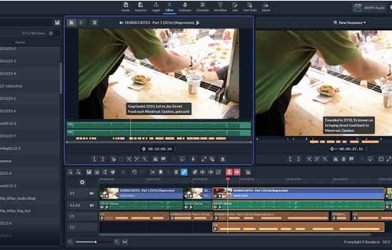
- Broadcast media production: Powered by Grass Valley’s GV Agile Media Processing Platform (AMPP) and integrated into OCI.
- Digital media production and streaming: Through platforms such as Ant Media and Bitmovin, orchestrated by Streamcake.
- Smart orchestration and automation: Provides compute, storage, networking, software, monitoring, captions, AI/ML overlays, and monetisation workflows.
“Media organisations are under pressure to deliver broadcast-quality content at digital speed and scale”, affirms Padraig O’Donovan, CEO of Layercake. “Streamcake not only modernises production workflows but also unlocks new commercial models for broadcasters, sports leagues, and digital platforms worldwide. We are pleased to partner with Oracle to offer our customers new ways to host their media workflows”.
“Content is king and media companies are moving faster than ever to cloud-based production and automation to stay ahead”, explains Chris Chelliah, senior vice president, Technology, Oracle Japan and Asia-Pacific. “Through our collaboration with Layercake, we are helping customers take advantage of OCI’s price performance, scalability, and security to monetize their live and on-demand media workflows”.


Comments are closed