


After the near-universal and quick transition to remote work during the 2020 pandemic, relying on some form of remote work is now the norm. Media and entertainment companies continue to rethink how their rapidly created remote workflows need to be permanent, scalable, and flexible to continue supporting global workforces of the future.


For M&E professionals working with extremely large file sizes, Signiant has developed different solutions, looking forward to optimizing remote workflows and including enhancing file transfer software with the modern enterprise capabilities required to address the industry’s requirements, as the company has claimed in a statement.
Back in 2020, when the world went remote, media businesses that were unable to quickly and easily empower their employees to work remotely found themselves disadvantaged as they scrambled and struggled to keep content flowing.
Currently, technology executives from across the industry report that remote workflows continue to be a priority. This includes a constant review of their tech stacks and a hard look to ensure that they have the right tools for the jobs at hand.
In this spirit, Signiant shares seven vital capabilities for remote work and remote collaboration software solutions.
File acceleration
The media industry is a high-pressure landscape where teams move masses of content as quickly as possible to meet extremely tight deadlines. The more diffuse your workforce is — the more partners or collaborators that make up a supply chain — the more critical speed becomes. Whether team members are sending files back and forth to each other or uploading drafts of projects into shared folders, ensuring that content gets where it needs to go as quickly as possible is mission-critical, especially in a global environment.
For this, the company has developed Signiant Media Shuttle, designed to enable users to securely and remotely access any size file anywhere in the internet-connected world. The company’s patented file acceleration technology moves files without restricting file size.

No file-size restrictions
In M&E, files are exponentially larger than those identified with other industries. As files continue to get bigger with more content created in new formats, including 4K and 8K — tools with file-size limits are nonstarters. As such, specific remote tools that work for other businesses simply will not support the workflows that film studios, television stations, OTT broadcasters, or game developers have to complete.
The power of remote work solutions ultimately lie in their flexibility and the idea that teams would be limited by what they could send and share simply because of file size almost entirely defeats the purpose. File-size limits stifle remote collaboration and in many cases, it’s simply not appropriate.
Checkpoint restart
This is an all too common scenario. While the frustration may at first seem petty, when it keeps happening again and again this one shortcoming leeches huge amounts of time away from an already tightly scheduled project just by itself.
This is why Signiant included checkpoint restart, with the intention of ensuring that any interrupted Media Shuttle transfer automatically restarts from the point of failure.

Easy Yet Powerful Web-Based Administration
Because admins, operations personnel, and IT professionals manage a workforce that’s spread out across a city, a country, or even the world, intuitive, easy-to-manage, centralized administrative features are fundamental to ensuring that remote teams can achieve success. Such features like delegated administration, storage configuration, access control and permissions, reporting, and managing notification settings make it easy to track all the activity surrounding incredibly valuable content. They also make training, onboarding, and getting started far easier for users.
When working remotely, the ecosystem mustn’t devolve into chaos. Administrative features must ensure that media companies avoid that, especially when operations managers can’t simply stroll over to a user’s desk to address an issue. The more distributed your teams and partners are, the more important it is to organize and delegate administrative responsibilities effectively. Without an easy, web-based solution for that, things will get messy quickly.
To try to resolve this, Media Shuttle enables the operations teams get complete control. They can customize send, share, and submit portals (including matching native languages), manage user access, and report on all activity from the web. Remote access to media assets has never been easier.

Storage options
Confidently controlling where your content is stored is a significant part of making remote access strategies work.
While some file transfer tools force businesses to use storage owned and operated by the tool’s creators, solutions that offer storage independence allow organizations to decide whether their files will live in the cloud, on-prem, or across a hybrid storage architecture. Because remote team members need access from many different locations at all different times, storage independence becomes a key element of security and control, which you can’t afford to ignore.
For example, with a Media Shuttle share portal, end users can log in securely from anywhere in the world and access assets without knowing or caring what type of storage is used or where that storage is located. Their experience is seamless and identical across all storage types and locations.

Onramp to the cloud
As the world shifts to more remote work, Signiant saw a more than 5x increase in data moving into and out of cloud storage endpoints. Cloud storage offers IT teams the ability to immediately spin up the storage they need without setting foot in the office.
So, for a company that must quickly implement or manage an expanding remote work environment, tools that make it easy to work with cloud storage from any provider are essential. For many looking to build a supportive remote infrastructure, cloud storage has become an invaluable resource. While storage independence is paramount, quickly and easily accessing the elasticity of the cloud provides even greater flexibility.
Enterprise-grade security
Perhaps security is the most predominant feature remote collaboration and file-sharing solutions should possess. In recent years, major media organizations such as Disney, HBO, and others suffered massive security breaches, resulting in the disruption of productivity, damage to reputations, and revenue loss in the form of highly valuable proprietary content.
As with many other features, the need for defense-in-depth security in any solution you select allows you to indulge in the incredible benefits of remote access while ensuring that no unauthorized access occurs.
Federated search
In a world where content is more widely distributed than ever, media professionals need access to their files — wherever they are stored. You don’t necessarily know or even need to know exactly where your content is, you just need to know how to find what you need when you need it.
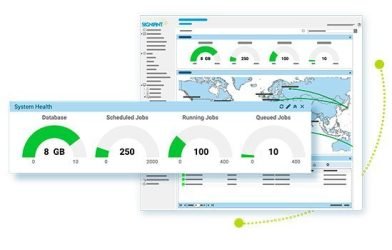
Media Engine, a Signiant Platform service, is designed to allow users to search, preview and take action on media assets across all Signiant-connected storage, from anywhere in the world.



Comments are closed