


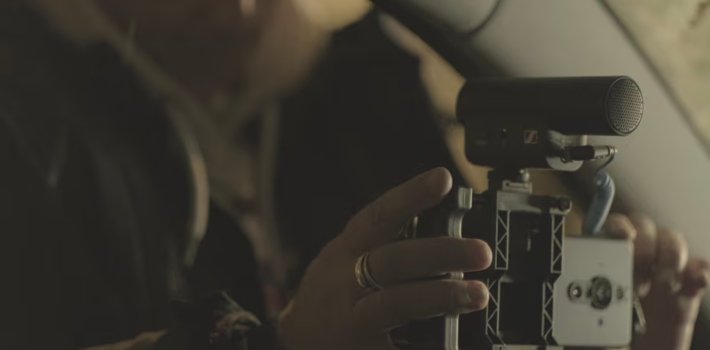
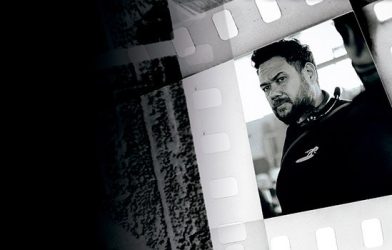
While the picture quality of mobile phone cameras is now on par with DSLR cameras, the inbuilt microphone technology has drawbacks. To try to combat this issue, the filmmaker Cassius Rayner looked to outboard equipment to supplement his phone and used the MKE 400, as Sennheiser has claimed in a statement.


“Before I created my own films, I worked on mainstream TV broadcasts for many years. We always used Sennheiser equipment, so when I started out with mobile filmmaking, I decided to cut through the noise and see what Sennheiser had to offer,” he said.
The MKE 400 microphone features a built-in windshield and shockmount to reduce wind and handling noise to make it work externally on location.
“Mobile shooting is an incredibly agile medium and The Missing was shot in five hours,” Rayner continues. “At a time when the film industry is suffering, it is imperative to have a way to get stories out there and really push boundaries. With your phone, you can shoot concepts or sequences that excite and engage others, anything is possible.”
Rayner has been shooting professionally with mobile phones since 2014, when he really got interested in how the technology was advancing. He has also worked on music videos, documentaries, drama and brand content.
“I was fascinated by the technology and could see a real future in it, especially for documentary. I took a lot of risks and decided to upskill myself. Interestingly, the skill sets are very different, so the swap from camera operation to phone-lens is not simple and many of the skills did not automatically transfer.”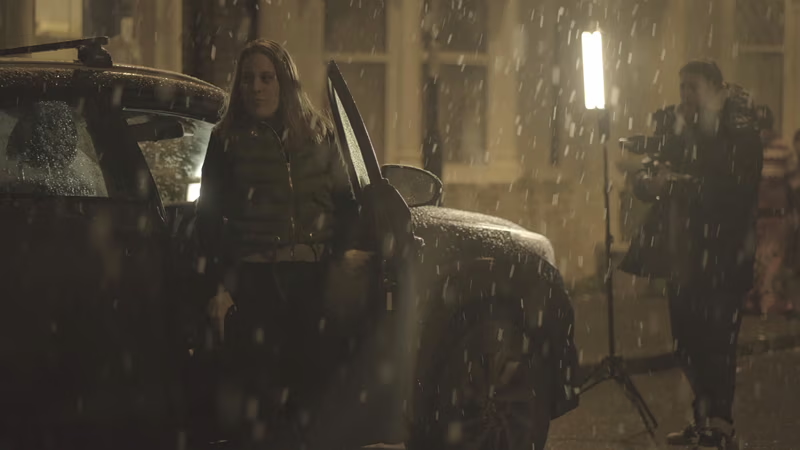
Rayner shares what he has learnt with filmmakers. His work with the Goethe Institute led him to teaching filmmaking techniques in Kinshasa, where he showed students and educators that telling stories and making documentaries does not need a mountain of equipment. Broadcast-quality films can be produced with the addition of a few items, most importantly a battery pack and portable hard-drive.
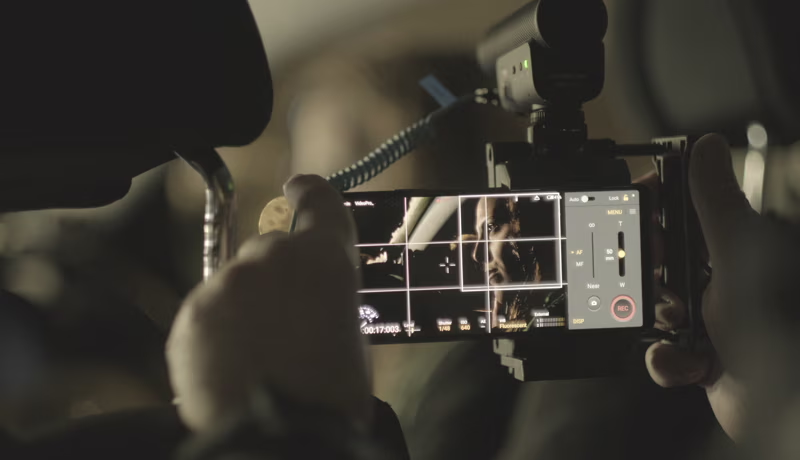
“Now that the file sizes are so much larger, even a one-terabyte hard drive will only give you 80 minutes of footage, so you need an external storage solution, plus a battery pack, then the mic, headphones, and maybe a light. With all those adapters and cables, it’s inevitable that something will become corrupted or disconnect.”
The monitorig of the MKE 400 is provided onboard via a 3.5-mm jack connection to focus on enabling single-person shoots and control of the audio. Its cardioid polar pattern enhances directionality, with the objective of isolating the desired sound source and minimising background noise.
“The MKE 400 is my go-to; they’re durable, compact and the sound quality is great,” he says. “The technology with phones means that there is a limit to the amount of equipment you can plug into them, so the direct monitoring is a massive bonus. I love the fact that you can plug straight into it and know that your live sound is up to recording quality. I don’t always have the budget for an additional sound recordist, so actually being able to hear live is essential.”
The Missing is just one of his latest projects. His teaching looks for inspiring the next generation of filmmakers who might not have access to more traditional film methods but, with a few simple bolt-ons, are learning to elevate the phone in their pocket to professional film standards.
 “Generally, as a filmmaker, working with smartphone technology has allowed me to cover stories that I don’t feel I could have captured using mainstream cameras,” he says. “I have worked in war-torn countries and with NGOs on medical rescue missions. My passion drove through to engage, inspire and excite young, aspiring filmmakers in how to use the phones that they already own to shoot really good content. It’s a great way to communicate with people who might not otherwise have a route into the film industry.”
“I’ve had some incredible mentors. They gave me their time because they’re absolutely fascinated by the process and possibilities of shooting features in this way,” Rayner concludes. “Everyone is still paid their wages, you still need a crew, you still need your actors, but you are able to bring the costs down. Using Sennheiser microphones is a way to keep costs down, too. I always tell my students about the different MKE microphones in the range, there is something for every situation.”
Rayner sees many more projects in the future, as the industry warms to the idea of a much more nimble way to tell stories.


Comments are closed