


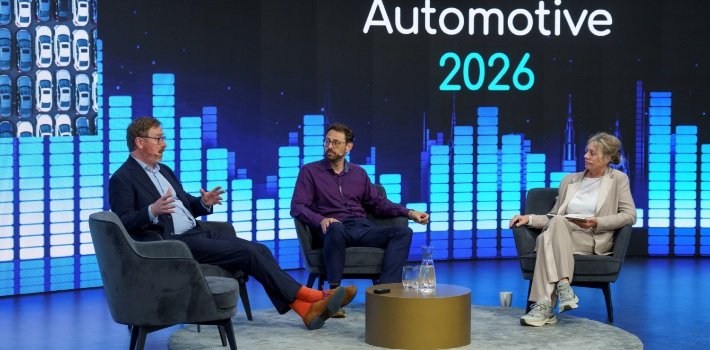
Global sales of DAB and DAB+ receivers have surpassed 166 million units, according to new figures unveiled at WorldDAB Automotive 2026 in Frankfurt. The new figure was announced alongside new international consumer research which confirmed that broadcast radio is a core part of the in-car experience which drivers still expect to be present, easy to find and simple to use, as the association has claimed in a statement.


The findings aimed to underline why DAB+ matters as the modern digital broadcast foundation for radio in connected cars.
Sales across 11 core markets now total 166.6 million devices, representing growth of more than 10% since the previous figures were published in February 2025. France and Italy were the fastest growing large markets, with strong increases in receiver numbers, coupled with coverage in France expanding to 80% of the population. The data also highlights the continued integration of digital radio in the automotive sector, with DAB+ now fitted as standard in almost all new cars sold across Europe. Similar regulatory approaches are also being adopted beyond Europe, for example in Saudi Arabia.
WorldDAB President, Jacqueline Bierhorst welcomed the strong growth in her keynote address to the annual event, which brings together the broadcast and automotive sectors. The global data is featured in the industry forum’s latest Digital Radio Infographic, published to coincide with the event, and available in both English and French.
Bierhorst also called for greater industry collaboration to secure radio’s position in the evolving in-car environment. “If we want broadcast radio to remain strong in the car, we need more than belief. We need proof, practical tools, shared language and coordinated action”, she noted. “That is what today is about. It is about confidence — because radio remains strong. It is about urgency — because the dashboard is changing. And it is about collaboration — because no single part of the ecosystem can solve this alone”.
The importance of broadcast radio and DAB+ was also highlighted in a video message from Sibyle Veil, CEO of Radio France and Chair of the EBU Radio Committee. “Our responsibility is simple: to ensure that citizens continue to have easy, universal and reliable access to trusted information wherever they are,” she said. “This is precisely why the place of broadcast radio and DAB+ in the carriage of tomorrow matters so much, not out of nostalgia, but because radio remains uniquely resilient”.
The event also marked the publication of new international consumer research by Fifty5Blue, formerly Kantar Media. The study found that radio is an essential part of the in-car experience, with 85% of in-car radio listeners saying they would “really miss having radio in my car”.
In a panel session exploring the new data, Gregor Pötzsch, CARIAD, VW Group explained: “For us it’s really important that our work to improve the user experience shines, because the customer is expecting ease of use and to find the radio prominent in the dashboard – radio is really important because it’s used daily”.
Further new data from Germany was unveiled by Xperi’s George Cernat and Gereon Joachim. In DTS AutoStage-equipped vehicles in Germany, almost 90% of total in vehicle radio listening was to DAB+, signalling a clear trend that DAB+ as the preferred in-car listening experience. From the same data, the second most listened-to station in those vehicles was 80s80s, broadcasting exclusively on DAB+, highlighting how DAB+ reach now unlocks new audiences for digital-first broadcasters.
Tobias Nielsen from Bauer Media Audio, and Tomas Granryd explained how Radio Ready is a shared broadcaster ambition, aligned with key partners and built for wider industry dialogue. “We want to protect what makes radio strong today, working towards what audiences will expect tomorrow”, Granryd added. Its key priorities include partnering with European and national governments to emphasise the importance of radio receivers in all new cars sold, developing an engagement strategy for car makers, aggregators and tech platforms, and extending the campaign reach in the USA and Asia.
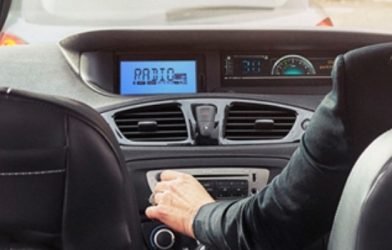
Explaining the title of his session, “Car radio done right”, Ole Jørgen Torvmark, Head of Products, Radioplayer showed a video of a teenager trying to find a radio station on a car radio, highlighting a challenge for the industry. “Radio can no longer assume that it will be found – radio has to earn its place in the connected dashboard”, he noted. “The good news is that the technology already exists. built on broadcast, enhanced by connectivity, designed for the listener – that’s what we mean by car radio done right”.
The conference also examined the role of public policy in accelerating DAB+ adoption. Last month, WorldDAB published its “DAB+ Public Policy Toolbox”, a framework designed to support policymakers and regulators considering the launch or expansion of digital radio services. Presenting the findings, David Fernández Quijada highlighted how effective public policy can accelerate receiver uptake. He noted that the EECC has played a major role in making DAB+ close to standard in new cars across Europe, providing a strong evidence base for strengthening and extending broadcast radio provisions in the forthcoming Digital Networks Act.
Lizzie Young, CEO of Commercial Radio & Audio in Australia spoke on “DAB+ and broadcast radio prominence in the age of the electric vehicle”. Drawing on twelve months of campaigning across government, industry and technology partnerships, Young delivered a progress report on Australia’s five-point strategy to secure the prominence of broadcast radio – across AM, FM, DAB+ and streaming – in connected cars. “We are going to have to start to get very noisy”, she stated. “The idea of a campaign like in Europe on connected journeys is top of our minds.” Young also highlighted opportunities for greater international collaboration and deeper engagement with automotive manufacturers.
Delegates also received an update on DAB+ rollout in Spain from Javier Sánchez Pérez, Director of Audiovisual Policy and Public Service at RTVE. He reported that the Draft Royal Decree on Digital Radio continues to progress through the legislative process and is expected to enter into force in December.
Under the plans, six new DAB+ services are expected to launch, with network rollout taking place in three phases and population coverage reaching 80% by 2029.
The event concluded with the announcement that the WorldDAB General Assembly and Summit 2026 will take place in Vienna, Austria, on 18–19 November. Austria currently has two national DAB+ multiplexes carrying 32 stations and approximately 85% population coverage. In late 2025, public broadcaster ORF launched a trial DAB+ transmission of its station Ö3.






Comments are closed