


By Tony Jones, Principal Technologist, MediaKind


New types of media content and the surging number of major live streamed events are driving a renaissance in media technology innovation, with new standards, formats, and resolutions evolving rapidly. One of the most prominent developments is around Ultra High Definition (UHD) with High Dynamic Range (HDR), which is on its way to becoming the mainstream viewing option for picture quality in streaming for valuable content.
UHD is not ‘just’ an upgrade of HD resolution: it’s the standard for content delivery and user experience that consumers now expect in their purchasing decisions and viewing preferences. Before speculating about the future of the UHD-based streaming ecosystem, it can be illuminating to refer to how streaming resolutions have evolved over the last decade and how consumer expectations have continually changed in response to technology advances.
Today’s Innovation is Tomorrow’s Standard
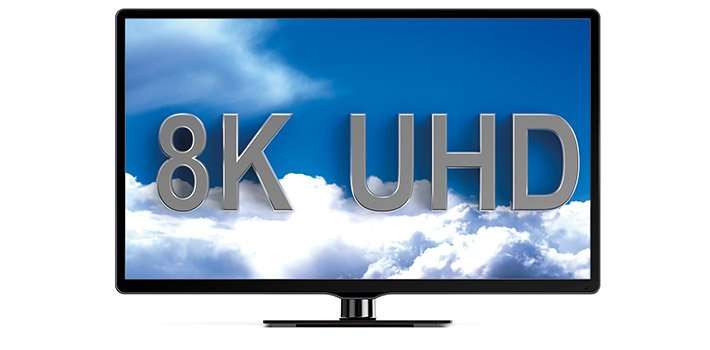
It used to be the case that device screen size roughly equated to consumer satisfaction with the viewing experience, while picture quality was closer to an adjunct than the main selling point. This is no longer the case. TVs are now sold and categorized by their resolution capacity, i.e., ‘HD TV’, ‘4K TV’ and ‘8K TV’. The arrival of 4K TVs in the early 2010s was the decisive point where picture quality moved from the marketing chorus line and was placed center stage. The combination of UHD, HDR used at both the content and display end of a media workflow makes the key step in the viewing experience.
The march forward of technology continually paves the way for higher expectations among consumers. It seems that no matter how far picture quality improves, even at the level of UHD technology, the mass market is never very far behind. This puts pressure on broadcasters, as a wave of new expectations closes in on the streaming market. It also raises the question of when we should expect consumers to embrace UHD as their new standard, and whether subscribers are ready to pay for higher resolution subscriptions given the current cost of living crisis. Netflix recently tested these waters with its tiered subscription offering based on video quality. Although consumer baseline expectations are currently anchored around HD quality, this could change quickly over the next couple of years.
What UHD Does (and Why it Matters)
It’s worth going deeper into what those billions of football fans can expect from UHD – for both its technical specifications and the resulting experience. From a consumer perspective, UHD means immersion and pristine picture. UHD’s requirement for progressive scans at 50Hz+ delivers clear and crisp picture and motion quality – even for fast-moving sports action – making fans feel transported and immersed into the action on-screen.
UHD also offers better conversion to other frame rates: progressive at 2160p50 converts with fewer artifacts to 2160p59.94 for international feeds that need different frame rates, and single-production UHD can be used to derive better conventional HD outputs. Combined with High Dynamic Range (HDR) broadcasters can present colors on the screen as they should be: the effect of a low-contrast or washed-out ‘filter’ that used to come between fans and the game will be a thing of the past. UHD delivers the fullest and richest experience that most sports fans will have ever encountered and may in turn act as a catalyst for wider adoption of UHD across the board.
How To Deliver UHD
What I’ve just outlined is the product of a successful UHD broadcast. But it’s only fair to caveat that exciting preview by outlining some of the challenges broadcasters face in making that prospect a reality. Technical and financial requirements pose a legitimate problem for broadcasters; many simply do not have the same resources that some of the global powerhouses have at their disposal. However, some complementary technologies can be used to close that gap in resources.
It’s here, where the connection between UHD and HDR and large screens is particularly strong. For high quality, valuable content such as the World Cup, consumers have every reason to watch on larger TV’s rather than smart phones or tablets. UHD and HDR streaming is not feasible on a phone, not least due to the size of screen needed to generate such a high-resolution picture. These types of events also tend to be best experienced in social viewing situations on big TV screens, be that in a living room or a sports bar.
All UHD connected TV manufacturers support High Efficiency Video Coding (HEVC), making connected TV’s a key driver for the adoption of HEVC and UHD among other formats. This trend allows TV operators to move away from QAM and multicast IPTV into the streaming world and is an important evolution in UHD viewing. One of the biggest barriers in delivering UHD over streaming for Pay TV is that operators must deliver each user their own unique stream, multiplying network traffic. By moving away from AVC encoded video to HEVC video, that transition to unicast streaming becomes a lot less bandwidth-demanding.
Preparing for a high-resolution future
As workflows for channel creation are updated, it makes sense to consider whether that offers an opportunity to move those workflows onto cloud infrastructure. Cloud offers, among other things, high levels of efficiency and cost savings through automation of the lifecycle and configuration of content flows. These savings add up and can make UHD financially viable sooner for a wider range of broadcasters. There are still more tools which can help close the technical and financial gaps to achieving UHD. VVC (Versatile Video Coding) is currently the highest standard of coding efficiency for producing UHD/HDR content. These tools may prove indispensable for broadcasters who aspire to adopt UHD, but there is an additional factor to consider for those who have ambitions beyond simply keeping up with their competitors. Investing in efficiency optimization, with the tools outlined above, is also a way to future-proof against the challenges of the streaming ecosystem. It all comes down to the preparation.
If there’s a general principle to take away from this, it’s that we must pay attention to consumer behavior to plan for the future. Not every innovation is guaranteed to take off – but no broadcaster wants to be left behind when the next big thing takes hold of the market. This means that unless you happen to be a mass-scale broadcaster, the way to prepare is by thoroughly investigating the available tools to leverage maximum efficiency and flexibility for both scale and agility in workflows. In other words, your next steps will be sharpening your axe in preparation, not only for UHD but as part of a long-term strategy to accommodate changing technology and consumer expectations.






Comments are closed