



By Maruis van der Watt, VP, Engineering, Teradek


*This content is included in the August issue of TM BROADCAST. You can access the full magazine here.
For decades, broadcasters viewed redundancy as an insurance policy. A backup transmission path, secondary encoder, or spare piece of equipment existed primarily for peace of mind. If something failed, there was a contingency plan.
Today, that mindset is evolving.
In modern live production, resilience is no longer about recovering from failure. It’s about ensuring failure never becomes visible to the audience.
The stakes have never been higher. Audiences consume live content across broadcast television, OTT platforms, social media, and mobile devices simultaneously. Whether they’re watching sports, breaking news, live entertainment, or corporate events, expectations are consistent: the stream works, the video is high quality, and interruptions are nonexistent.
As a result, network resilience has become a business-critical priority.
A major reason is the industry’s growing reliance on IP-based workflows. Traditional broadcast infrastructure relied on controlled environments and dedicated circuits. Today’s productions depend on public internet connections, cellular networks, cloud platforms, remote contributors, and distributed teams.
The advantages are substantial. IP connectivity has expanded flexibility, reduced costs, and enabled new production models. But it has also introduced new points of failure. Congestion, packet loss, latency spikes, bandwidth fluctuations, and cloud outages can all disrupt a live production.
Broadcasters are responding by redefining resilience. Historically, resilience relied on backup systems that remained idle until needed. Today, it depends on architectures that combine redundancy, visibility, and intelligent adaptation. The goal is not simply to survive failures, but to continue operating seamlessly when they occur.
This is especially important in the field, where network conditions can change without warning. A crowded venue can overwhelm local networks, while breaking news often unfolds in areas with limited infrastructure. In these situations, relying on a single connection is increasingly viewed as an unnecessary risk.
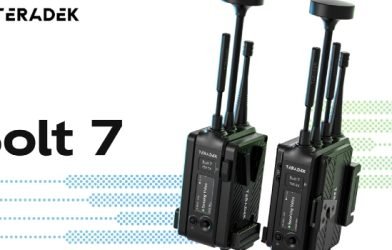
Solutions that aggregate multiple cellular and IP connections, such as Teradek’s Link — which can aggregate multiple cellular and IP networks into a single managed connection — are valuable tools for improving reliability.
By leveraging multiple carriers and network types simultaneously, production teams can reduce dependence on any single provider and maintain connectivity even when individual networks experience congestion or degradation.
Looking ahead, resilience will only become more important.
The most successful workflows will not be those that avoid failure entirely. They will be the ones designed with enough redundancy, visibility, and adaptability that when failures do occur, they don’t affect the audience experience.
In live production, that distinction makes all the difference.






Comments are closed