


With an eye on the close of 2025 and the immediate horizon of 2026, we have consulted diverse industry leaders who have collaborated with the magazine throughout the year, inviting them to share a reflection, based on their experience, on the year coming to an end and the one ahead. Drawing on their testimonies, we take stock of the year and anticipate the key factors that will shape the evolution of the broadcast industry


*This content is included in the December issue of TM BROADCAST. You can access the full magazine here.
By Daniel Esparza
The broadcast industry continues to move forward amid a complex process of transformation, in which new opportunities are emerging alongside significant challenges. This is one of the key conclusions of 2025. The transition is now unavoidable. However, when it comes to putting it into practice, difficulties arise that go beyond purely technological considerations and force the industry to rethink its models, structures and priorities.
To take the pulse of this pivotal moment, we have consulted a selection of industry leaders who have collaborated with the magazine over the past year, asking them for a review of 2025, a look ahead to 2026, and a broader reflection on the levers that will drive the sector’s growth in the medium and long term.
From this analysis, several common vectors emerge: the steady advance of the transition to IP; the progressive convergence of the broadcast, IT and ProAV worlds; growing challenges related to talent and cybersecurity; and, cutting across all of them, the impact of artificial intelligence.
We have divided this special feature —which can be read in full in the latest issue of TM BROADCAST— into seven sections. In this article, we outline the key takeaways from the chapter dedicated to Talent shortage.
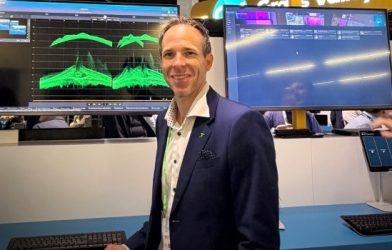
Andy Bellamy (AJA): “Now is the time for the industry to start building a solid knowledge base of IP infrastructure and supporting technologies and invest in the right IT talent”
The shortage of specialised talent has emerged as one of the key cross-cutting issues of 2025 and is shaping up as a structural challenge looking ahead to 2026. Many of the experts consulted point to this issue, agreeing that the sector’s technological evolution—driven by convergence with IT, cloud and IP environments—is advancing faster than organisations’ ability to absorb it from a human and organisational standpoint.
From this perspective, Scott Stiefel (Telos Alliance) warns that, although broadcasters and content creators clearly want to move towards IT infrastructures, cloud production and IP transport, the industry still lacks a sufficient critical mass of professionals with the technical skills required to ensure a smooth transition.
“This creates friction in the organization as executives and finance teams are pushing hard to speed up this transformation but the technical staff is held accountable for the reliability of the broadcast and (rightly so) is risk-averse given the black-box nature and potential loss of control in these new paradigm.”
In this context, Stiefel highlights the key role of manufacturers, who are expected to help close this gap through more intuitive tools, automation, smarter workflows and highly qualified support services.
A similar view is shared by Andy Bellamy, Technical Director at AJA, who notes that while baseband will remain a central element of workflows in the short term, the flexibility and scalability of IP will progressively drive its adoption. “Now is the time for the industry to start building a solid knowledge base of IP infrastructure and supporting technologies and invest in the right IT talent.”
Ubaldo Toni (RAI) places the focus on training young talent as a strategic priority. In his view, IT technologies—databases, virtualisation, file and media management—are already fundamental to broadcasting, but they come with specific requirements that demand sector-specific expertise: “Young professionals (…) should no longer be mere users of external software. They need to understand the underlying mechanics and be able to build solutions internally, or at least be able to effectively govern the various IT offerings, many of which are not suitable for the media landscape.”
Toni also warns of the risks of uncritically applying IT practices from other sectors, particularly in areas such as cybersecurity, where a lack of specialisation can lead to both operational disruptions and critical vulnerabilities.
Cybersecurity itself is also emerging as a growing concern among industry professionals. Jan Eveleens (Riedel) confirms that this issue is rapidly gaining weight in customers’ priorities: “In 2026, it will definitely become a more important element in their decision-making process”.

Scott Stiefel (Telos Alliance): “Executives and finance teams are pushing hard to speed up this transformation but the technical staff is held accountable for the reliability of the broadcast and (rightly so) is risk-averse”







Comments are closed