


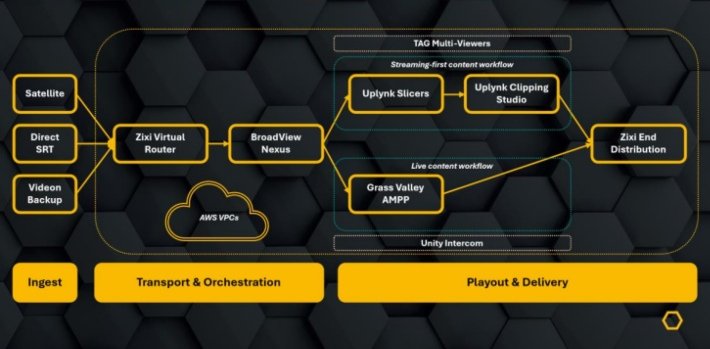
Zixi, Grass Valley, Uplynk and BroadView Software have announced a collaboration to develop an IP-based framework. This is designed to help broadcasters transition from fixed satellite distribution to a flexible, cloud-based architecture, as the companies have shared in a statement.


The IP Convergence Framework for Distribution explores how the four technology providers combined cloud-based master control, IP transport, workflow orchestration and streaming infrastructure into a modern distribution model. It offers a practical blueprint for organizations evaluating cloud-based master control rooms (MCRs), infrastructure modernization and the future of content distribution.
The framework draws on a deployment for a broadcaster with a global distribution footprint of more than 1,000 receive sites. The project was designed to replace a costly and inflexible satellite distribution infrastructure with a software-defined architecture that combines broadcast workflows with the reach and flexibility of streaming.
Four technology layers for IP distribution
The framework brings together four core technology layers. Grass Valley provides broadcast operations and playout, including cloud-based master control; Zixi handles IP transport and delivery; BroadView Software provides workflow orchestration and automation through its Nexus platform; and Uplynk supplies the streaming and integration layer.
AWS provides the underlying cloud infrastructure. The architecture is designed to bring broadcast and streaming operations into a common operational model, combining cloud-based workflows with broadcast-specific requirements for reliability and control.
The framework also incorporates technologies from other providers, including TAG and Zixi ZEN Master for monitoring and visibility across the distribution chain. The overall architecture is designed to support flexible workflows, redundant delivery paths and the ability to scale services as requirements change.
A flexible and scalable distribution model
The architecture follows the content workflow from ingest through cloud-based processing, master control and distribution. By combining IP transport, workflow automation and streaming infrastructure, the model allows broadcasters to modernise their operations without relying exclusively on fixed, hardware-based distribution facilities.
Its modular approach is designed to let operators scale channels, endpoints and services without redesigning the underlying infrastructure. Cloud-based operations also offer greater flexibility in how distribution workflows are deployed and managed, while redundant architectures and continuous monitoring help maintain service reliability.
The framework identifies infrastructure cost optimisation, operational flexibility and resilience as key benefits of the approach. It also provides a model for broadcasters seeking to combine traditional broadcast operations with streaming-oriented distribution workflows.
Preparing for the US upper C-band transition
The framework comes as US broadcasters face changes to the upper C-band spectrum used for satellite services. On July 22, 2026, the Federal Communications Commission (FCC) adopted rules to make 160 MHz of upper C-band spectrum available for terrestrial wireless services through a public auction, which must be completed by July 4, 2027.
The decision establishes a transition process for incumbent satellite operations in the affected spectrum. Against this backdrop, IP-based distribution offers broadcasters an alternative architecture for maintaining content delivery as existing satellite infrastructure evolves.
Live deployment and upcoming presentation
The framework is based on a real-world deployment for a broadcaster with a global footprint and is already in production. The partners present it as a practical model for organisations evaluating the migration of distribution operations to IP and the cloud.
The companies will discuss the architecture and its implementation at a technical session in New York City on October 21, 2026. The session will bring together the teams behind the framework to examine how cloud-based master control, IP transport, orchestration and streaming can work together in broadcast distribution.





Comments are closed