


Timeline, a broadcast facilities company with headquarters in UK, has teamed up with Videosys Broadcast to enhance coverage of the British Basketball League championships, currently broadcasted on Sky Sports, the League’s UK partner. By implementing Videosys camera control at each basketball venue, Timeline’s production staff can manage multiple cameras remotely from a central location in London.


The British Basketball League championships feature 10 clubs playing three to four games every weekend across various UK venues. To optimize resources, Timeline has devised a remote production solution, minimizing expenses on personnel and equipment.
The solution entails Timeline providing studio space at its Ealing Broadcast Centre in West London for the League’s production crew and presenters. Additionally, technical personnel and identical flyaway equipment kits are deployed at each venue. On match days, feeds from four Sony cameras at the venue are transmitted back to Ealing via ethernet connections, allowing the production crew to handle aspects like color balance, camera angles, and vision mixing from the gallery.
John Hayhurst, Senior RF Project Manager at Timeline TV, highlights the transition to data transmission via ethernet cables and IP addresses: “These days, we don’t move anything around in baseband video – it’s all just data sent via ethernet cables and IP addresses.” The production is centralized at Ealing, where camera control and tally information are managed, with the latter sent over an IP system to control radio cameras at the venue.
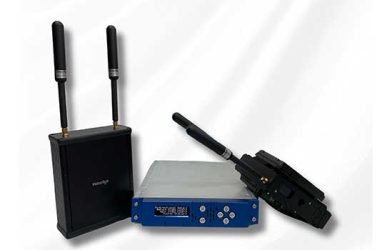
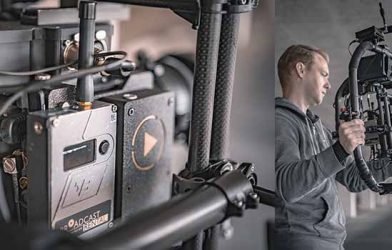
Timeline utilizes Videosys camera control system, comprising an Indoor Unit (IDU) at Ealing, an Outdoor Unit (ODU) at the venue, and a compact Camera Receiver (RXSM-E) mounted on each camera. The system allows seamless control of camera settings regardless of location.
While currently unicasting camera control data between Ealing and each venue, Timeline’s system has multicasting capabilities, enabled by identical equipment at all venues. Videosys’ CCU system, fully IP-based, supports TCP and UDP delivery, ensuring data transmission over wide area networks with guaranteed latency as the company states.
The overarching aim of remote production is to streamline operations across multiple events on the same day. “This is what lies at the heart of the technical setup we have put into place for the League’s basketball coverage,” says John Hayhurst. “Years ago, covering multiple games would involve sending an entire crew to each venue, which was obviously expensive and labor-intensive.”





Comments are closed